Why Insurance Companies Need 24/7 Underwriting Admin Support

Insurance companies work hard to protect their clients and run efficient operations. Underwriting is the process where these companies assess the risk and decide if they will offer insurance coverage and at what cost. This job needs to be done quickly and correctly. However, underwriting does not only happen during normal office hours. Insurance companies now need support every hour of the day. In this article, we explain why 24/7 underwriting admin support is critical for insurance companies.

Underwriting: The Heart of Insurance

Underwriting is the core task of an insurance company. Underwriters check risks and decide on policy terms. They study client information, review details, and then approve or deny applications. In a busy market, decisions need to happen fast. If underwriting takes too long, clients may turn to other companies. Fast underwriting is essential to stay competitive.

When underwriting happens only during normal business hours, it can cause delays. Many clients live in different time zones. They need support outside the typical 9-to-5 workday. A 24/7 system can help serve clients at any time and help insurance companies operate more efficiently.

The Need for Speed in Underwriting

Insurance applications and claims are time-sensitive. A delay in processing can slow down the whole process. Many applications need to be reviewed and approved quickly. Fast processing helps clients get their policies and claims settled on time. When underwriting support is available 24/7, work moves faster. Tasks like data entry, document review, and follow-ups happen immediately. This quick turnaround builds trust between clients and insurers.

Timely underwriting also helps in managing risks. When new information comes in, underwriters can react right away. Quick responses can save money and prevent future problems. For example, if an error is found in a policy, it can be fixed immediately. This speed helps maintain high standards in risk management.

Reducing Errors with Constant Support

Insurance underwriting relies on accurate data. Underwriters enter information, check records, and update details continuously. When support is available only during the day, work can pile up overnight. This delay in the workflow may cause errors. With 24/7 support, mistakes and omissions are caught and corrected faster. Every piece of data gets a second look quickly.

Constant support also means that work is checked regularly. Errors in data can lead to wrong decisions. Accurate data helps in making sound choices about who gets insured and at what rate. A small mistake that goes unnoticed can cost a company a lot of money later. With round-the-clock support, errors do not have time to grow. This keeps the system clean and reliable.

Keeping Up with Regulations

The insurance industry follows many rules. These rules often change and companies must follow them closely. Underwriting must match all the regulations. A delay in updating records or checking compliance can lead to fines or legal trouble. With 24/7 underwriting support, records stay current. Staff can update and check information at any time. This constant vigilance helps the company meet all regulatory requirements.

In a world where laws change quickly, insurance companies must act fast. If an update in regulation occurs, the team can work on it immediately. This fast reaction keeps the company in compliance with the law and avoids penalties. Regular checks and updates are key to long-term success.

Better Communication and Coordination

Underwriting is not a one-person job. Many teams work together to process an application. Sales teams, risk managers, claims adjusters, and legal teams all share information. When support runs 24/7, communication flows more smoothly. Information moves fast between teams. This strong connection means that decisions are made with full knowledge of all details.

When an application is received after regular business hours, the support team can take action right away. They can reach out to other departments as needed. This continuous flow of information prevents work from getting stuck. The whole process runs like a well-oiled machine. Good communication builds a strong team and improves overall performance.

Improving Customer Service

Clients expect quick and clear responses from their insurance company, and they aren’t always ok with waiting until the next morning to get an answer. A 24/7 support team can help answer questions more quickly and without interruption. This commitment promotes customer satisfaction and produces happier clients. Clients that feel valued are more likely to stay with the company and recommend it to others. The Role of Technology in 24/7 Support

Technology enables continuous underwriting services throughout the day and night. Software tools power most companies in their search for data control and workflow management. Systems automate tasks which serve to augment human operators by identifying mistakes and maintaining database records. Computers can operate during any period of the day. Staff members dedicate their time to challenging tasks because systematic procedures operate through these supportive technologies.

Real-time data analytics represents a system that enhances operational efficiency. The team gains better visibility into which jobs must receive immediate attention. The system sends out automatic notification alerts which keep the team at each step on schedule. The use of technology enables maintenance of real-time communication between staff working in multiple time zones. The remote workforce relies on messenger applications and video conferencing to accomplish their tasks regardless of their physical locations. Human support working with technological capabilities generates a continuous operation system that functions around the clock.

Conclusion

Insurance providers require constant underwriting administrative support as it leads to better market competitiveness alongside operational efficiency. Fast processing times reduce errors and succeed in better compliance improvement of customer service and reduced errors among the numerous advantages. Under continuous support insurers achieve better control over global needs while managing risks effectively while saving costs over time.

The modern insurance industry needs underwriting solutions now more than ever before. Continuous support operations by companies produce superior operational results along with superior customer engagement. Fast policy processing supported by this method develops both customer trust and industrial dependability.

Insurance will evolve through technological developments while maintaining continuous support to all operations. Appropriate systems installed in underwriting operations will allow this sector to transition from reactive responses to proactive efficient service delivery. Insurance organizations that implement accessible and continuous underwriting administration services gain superiority in facing future market requirements.

See how Boost USA can help implement some or all of these concepts into your workflow today!  Click here to learn more.

How Self-Inspections Are Changing the Insurance Industry

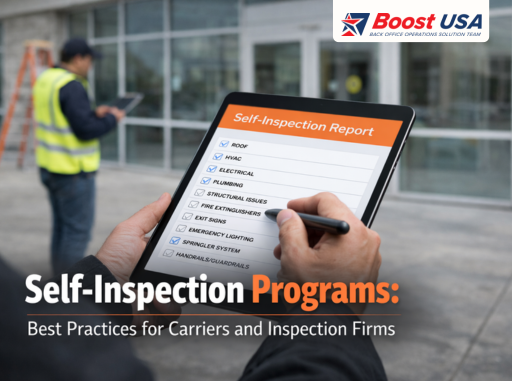
The insurance sector has long depended on deep inspections to gauge risk, confirm claims, and assess proper coverage. Field agents once had to visit sites in person, which caused many delays, added extra costs, and created complex planning issues. Now, self-inspections offer a fresh path that saves time and cuts costs across the board. Tech gains, more automation, and better process flows now push this shift toward faster, less expensive and more efficient inspection results.

The Evolution of Self-Inspections

Self-inspections have grown more common as they slash the time and funds needed for old-style checks. Policy owners can now inspect their own sites through smart apps or web tools that grab all key facts and images. This data moves straight to QA teams, where smart systems and strict reviews ensure all facts match up before the final report goes out.

More firms now choose self-inspections since they reduce the need for staff visits and make the whole task much simpler. When clients can snap their own homes, cars, or goods; the firms can work through claims with great speed while preserving all rules and facts in perfect order.

The Benefits of Self-Inspections

Self-inspections bring many core perks to the insurance world, which makes them mutually beneficial for both firms and their clients.

  • Faster Turnaround Time: Old checks could take days or weeks due to packed work times and long trips. Self-checks let facts flow in right away, which cuts wait times significantly.
  • Cost Savings: In-person checks rack up fees for gas, time, mileage, staff pay, and desk work. Self-inspections eliminate these costs, which helps both firms and their clients save more cash.
  • Increased Accessibility: Clients who live far from towns or in spots with few field staff can run their own checks with no long waits. This means all folks get quick help, no matter where they call home.
  • Enhanced Accuracy Through Automation: Self inspections often link with smart tools that check image specs, map spots, and full form details. These tools help keep all facts true and block false claims from the start.
  • Improved Policyholder Experience: By giving clients the power to check things when they wish, firms make the whole task feel smooth and clear. Clients no longer need to sync their day plans or wait for field staff to show up.

Ensuring Quality and Compliance in Self-Inspections

Self-inspections deliver many advantages, but accuracy and compliance remain vital concerns. Insurance firms must employ strong quality checks to verify all submitted information.

  • Structured Digital Workflows: Automated platforms guide users through each step, making sure they record needed images, papers, and facts. This approach cuts errors and creates uniform standards across all inspection cases.
  • AI and Machine Learning for Verification: Advanced systems check data for problems, gaps, or signs of fraud. AI validation boosts accuracy and fights against false claims effectively.
  • Human Review for Added Assurance: While machines handle much work, human experts still play a key role. They examine inspection data, confirm its truth, and ensure compliance before they finalize reports.
  • Secure Documentation and Compliance Tracking: All self-inspection data stays safely stored and monitored, meeting legal rules and allowing quick access when needed.

The Role of Self-Inspections in Different Insurance Sectors

Self-inspections now change many areas within the insurance industry, including:

  • Property Insurance: Home and building owners can send photos and reports for new policies, renewals, or damage claims.
  • Auto Insurance: Drivers can provide images and papers showing vehicle condition for new coverage, accident claims, or regular checks.
  • Small Business Insurance: Companies can inspect their own locations, tools, or safety measures to keep coverage valid and meet risk review needs.
  • Disaster and Catastrophe Claims: After storms, fires, or other events, self-inspections let policyholders document damage quickly and start claims without waiting for adjusters to arrive.

The Future of Self-Inspections in Insurance

As tech grows more advanced, self-inspections will gain new features and wider use. Coming trends include:

  • Augmented Reality (AR) Assistance: AR tools will offer live guidance, helping users capture proper angles and details during their inspections.
  • Blockchain for Secure Data Storage: Blockchain systems will improve openness and safety, preventing data changes and building trust in inspection reports.
  • Predictive Analytics for Risk Assessment: Advanced data tools will help insurers judge risks more precisely using past inspection records, creating better pricing and risk control.
  • Integration with IoT Devices: Smart home sensors, driving trackers, and other connected tech will deliver real-time data for constant risk watching, reducing manual inspection needs.

Boost USA’s Role in Strengthening Self-Inspections

Self-inspections now revolutionize property assessment methods for insurance firms, delivering quicker and more economical alternatives to conventional inspection approaches. Achieving precision and compliance demands a methodical strategy in this new framework. Boost USA serves a crucial function in coordinating this process with maximum efficiency. We handle every aspect from scheduling appointments to managing communications and documentation, ensuring all self-inspections follow proper protocols and meet deadlines, to providing real-time (guided) support while performing the inspection. Our system automatically sends reminders, oversees follow-up communications, and minimizes errors, creating a fluid experience for insurance companies and their customers.

After inspection submission, we verify all materials against compliance benchmarks and quality standards. Our quality assurance protocol combines automated checks with expert review to authenticate details and identify any inconsistencies or problems. This comprehensive approach provides insurance companies with accurate reports without unnecessary delays or information gaps. We also supervise the entire recommendation process, monitoring required actions and ensuring identified risks receive prompt attention and proper resolution.

Boost USA converts self-inspections into a fully managed and dependable system for insurance providers. By combining technological solutions with human expertise, we deliver a precise, efficient, and thoroughly documented inspection processes. Our approach enhances compliance standards while simplifying workloads, allowing insurance organizations to concentrate on making well-informed decisions with complete confidence in their assessment data.

Self-inspections revolutionize the Insurance Industry by making inspections faster, cheaper, and more accessible to all. Through digital tools, automation, and quality checks; insurers maintain high accuracy while improving customer experience. As technology advances, self-inspections will keep evolving, offering greater speed and trust. This change means more than just convenience—it reshapes how insurers evaluate risk, handle claims, and manage policies in our increasingly digital world.

Territory Management for Loss Control – Challenges & Best Practices

Managing loss control inspections is more than just scheduling visits and filing reports. It’s about reducing risk, keeping operations efficient, and ensuring every step is completed on time. If territory management isn’t handled correctly, inspections get delayed, reports pile up, and costs increase. For insurance carriers, MGAs, and mutuals, structuring inspector territories properly helps maintain workflow efficiency and lowers risk exposure. It ensures inspectors are assigned strategically, workloads are balanced, and reports are processed without error.

Without a solid system, businesses struggle with scheduling conflicts, incomplete reports, and compliance issues. That’s why companies must adopt a structured approach or work with an expert team that specializes in loss control territory management. Poor planning can lead to lost time, inefficient processes, and compliance risks, making it critical to establish best practices that keep everything running smoothly.

The Role of Territory Management in Loss Control

Loss control inspections are only as good as the system behind them. If territory assignments are a mess, inspections get missed, reports are late, and businesses struggle to stay compliant. Proper territory management ensures:

  • Better Risk Mitigation – Inspections happen on time, risks are identified early, and underwriters have the info they need to make decisions fast.
  • More Efficient Scheduling – When inspector territories are mapped out correctly, appointments get scheduled faster, cancellations don’t cause chaos, and everything runs like clockwork.
  • Even Workload Distribution – No one inspector is overbooked while others have nothing to do. A balanced workload keeps inspections moving without delays.
  • Faster, More Accurate Reporting – The quicker reports are processed, the sooner insurers can take action. A structured system ensures data is complete, accurate, and easy to access

Without strong territory management, loss control becomes an uphill battle. That’s why having a solid strategy (or a reliable partner) makes all the difference.

Common Challenges in Loss Control Territory Management

Even the best-run businesses run into problems when managing loss control territories. Here are some of the biggest roadblocks:

Scheduling & Coordination

  • Trying to balance inspector availability, travel time, and urgent inspections can be a logistical nightmare.
  • Last-minute cancellations or rescheduling lead to inefficiencies and missed deadlines.
  • Without a clear system in place, businesses struggle to keep track of assigned and completed inspections.

Data Accuracy & Reporting

  • If reports contain errors or missing information, they have to be redone, wasting time and resources.
  • Manual data entry increases the risk of mistakes, slowing down underwriting decisions.
  • Inconsistent reporting formats make it harder to analyze trends and improve risk assessment.

Quality Control

  • If reports aren’t double-checked before submission, errors slip through the cracks.
  • Lack of standardized review processes results in inconsistent inspection quality.
  • Without proper oversight, inspectors may miss critical details, leading to inaccurate risk evaluations.

System Integration

  • Many businesses use loss control platforms like LC360, but poor integration with internal systems causes inefficiencies.
  • Some companies still rely on outdated or manual processes, leading to delays and increased costs.
  • Automating workflows within these systems can be complex, requiring specialized expertise.

Compliance & Documentation

  • Regulatory requirements are constantly evolving, making it tough to stay up to date.
  • Missing or incomplete documentation can lead to compliance violations.
  • Keeping records organized and accessible is a challenge without the right tools.

Best Practices for Effective Territory Management

To overcome these challenges, businesses must adopt strategic best practices that optimize territory management. Assigning inspectors strategically is key to ensuring balanced workloads and reducing inefficiencies. Using AI-driven scheduling tools can help minimize travel time, improve coverage, and ensure that inspections are evenly distributed. Businesses that fail to plan inspector assignments properly often experience bottlenecks and slowdowns in their loss control processes.

Automation plays a major role in improving efficiency, particularly when it comes to data entry and report processing. By reducing manual work, businesses can minimize errors and increase processing speed. Integrating loss control platforms like LC360 ensures that data is updated in real-time, allowing for faster decision-making. Companies that rely on manual data processing struggle with delays, inaccuracies, and compliance risks, making automation an essential part of loss control management.

Another critical aspect of effective territory management is implementing strict quality assurance measures. Reports must go through a standardized review process to catch errors before submission. Training teams on compliance requirements and best practices helps maintain accuracy and consistency. Automated quality checks also improve efficiency by flagging inconsistencies and missing information. Without these measures, businesses risk submitting reports that contain errors, leading to delays and compliance issues.

How Boost USA Simplifies Loss Control Territory Management

Managing loss control inspections internally can be time-consuming and complex, but Boost USA simplifies the process by handling key administrative and quality control tasks. Businesses that partner with Boost USA benefit from structured territory management solutions that ensure efficiency, accuracy, and compliance.

Boost USA provides full-scale administrative support by managing scheduling, workload balancing, and inspector coordination. Companies no longer have to deal with the hassle of organizing inspection assignments or keeping track of inspector availability. Boost USA also ensures that all reports go through a rigorous quality assurance process, eliminating errors and ensuring compliance before submission.

In addition to administrative support, Boost USA takes charge of document processing and loss control system integration. Businesses often struggle with handling inspection reports, recommendations, and compliance paperwork, but Boost USA ensures that all documents are managed efficiently. By seamlessly integrating with loss control platforms like LC360, Boost USA streamlines data processing, reduces manual work, and ensures that inspection reports are processed quickly and accurately.

One of the biggest benefits of partnering with Boost USA is eliminating backlogs and inefficiencies. Many businesses face challenges in managing inspector territories, leading to slow turnaround times and compliance risks. With Boost USA’s structured approach, companies can eliminate delays, improve report accuracy, and maintain compliance with industry regulations. Loss control operations become more streamlined, allowing businesses to focus on core operations without being weighed down by administrative tasks.

Final Thoughts

Loss control territory management plays a vital role in ensuring that inspections are scheduled efficiently, reports are processed accurately, and compliance requirements are met. Businesses that do not have a structured system in place struggle with scheduling issues, data inaccuracies, and compliance risks. Implementing best practices such as automated scheduling, data integration, and quality assurance improves efficiency and ensures that loss control efforts remain consistent.

For businesses looking for a more hands-off approach, outsourcing to experts like Boost USA is the ideal solution. With full-scale territory management support, including scheduling, quality assurance, document processing, and system integration, Boost USA ensures that loss control operations run smoothly. Companies no longer have to worry about backlogs, compliance risks, or inefficiencies. By partnering with Boost USA, businesses can focus on core objectives while ensuring that their loss control processes remain structured, compliant, and efficient.

For expert loss control territory management solutions, contact Boost USA today and take the stress out of inspections.