
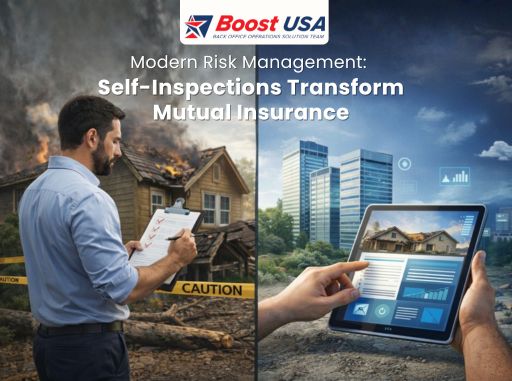
Imagine turning your constant risk headaches into opportunities for growth, efficiency, and lower costs without hiring additional staff. This is exactly what self-inspections have been doing for modern mutual insurance companies. Risk management is evolving rapidly in an era where fast decision-making, data accuracy, and customer experience matter the most.
Traditional inspections have long been a necessity but also an expensive part of insurance operations. Today, modern mutual inspections powered by self-inspections are changing the landscape. They allow insurers to assess risk faster, improve accuracy, and deliver a better experience to policyholders without compromising quality.
Why Mutual Inspections Matter More Than Ever?
Mutual insurance companies operate differently from traditional insurers. These companies exist to serve their members, not shareholders. This means efficiency, long-term stability, and fairness matter more than ever. However, rising claims costs, operational pressures, and climate-related risks have forced insurers to rethink how inspections are conducted.
Mutual inspections shift part of the inspection process directly to policyholders. Instead of waiting for an inspector to visit a property, insurers send a secure digital link. Policyholders complete guided self-inspections using their computer or phone and submit photos, videos, and answers in real time. This approach reduces delays while maintaining the integrity of the inspection process.
How Self-Inspections Work in Mutual Insurance?
Self-inspections are simple. Policyholders receive step-by-step instructions that guide them to capture images, record videos, and provide property details. This streamlined process requires no app downloads and works on most devices.
Once the process is completed, inspection data becomes instantly available to insurance teams. This enables underwriters to review risks faster and make informed decisions, eliminating the need to wait days or weeks for field reports.
Mutual inspections blend the speed of technology with the oversight of experienced insurance professionals. If something appears concerning, insurers can escalate the case to a physical inspection team. This hybrid approach ensures accuracy while saving time and cost.
Traditional Inspections vs. Mutual Inspections
Aspect | Traditional Inspections | Mutual Inspections |
Scheduling | Delays common | Immediate |
Cost | High travel and labor costs | Significantly reduced |
Data Speed | Days or weeks | Real-time |
Policyholder Experience | Passive | Engaged |
Scalability | Limited | Highly scalable |
No wonder why mutual inspections are becoming the preferred inspection methods across the insurance sector.
Why Mutual Insurance Companies Adopting New Inspection Methods?
Mutual insurance providers benefit significantly from mutual inspections because they prioritize member experience and long-term sustainability. These companies see immediate value in faster inspections and improved data quality.
Self-inspections empower policyholders and create complete transparency. Members feel more involved in the insurance process, which builds trust, improves retention rates, and strengthens relationships. From an operational perspective, insurers can conduct more inspections without adding staff, allowing teams to focus on higher-risk cases while routine work is handled efficiently.
Risk Management Benefits of Mutual Inspections
Mutual inspections are not just about convenience. They improve risk management in several meaningful ways:
- Faster identification of hazards before losses occur
- More accurate property data for underwriting decisions
- Reduced exposure caused by outdated inspection reports
- Better prioritization of high-risk properties
Because inspection data is captured digitally, it can be stored, analyzed, and compared over time. This helps insurers identify trends and improve long-term risk strategies.
Better Experience for Policyholders
One of the biggest advantages of mutual inspections is the improved experience for policyholders. There is no need to wait for appointments or rearrange schedules, as inspections can be completed at any time.
This flexibility is invaluable for businesses, large properties, and seasonal operations. Policyholders value speed and simplicity, while insurers benefit from fewer complaints and faster responses.
A smoother inspection process leads to happier members and stronger loyalty, which is critical for mutual insurance success.
Quality Control and Accuracy
A common concern with self-inspections is whether they compromise quality. In reality, the opposite is true. Guided workflows help policyholders submit the right information in the correct format. Photos and videos are timestamped and reviewed by insurance professionals.
Automated checks flag unclear or missing data. If necessary, insurers can request additional information or schedule a follow-up inspection. This layered approach ensures mutual inspections remain reliable, accurate, and compliant.
Cost Efficiency Without Cutting Corners
Traditional inspections involve significant costs, including travel, scheduling logistics, and limited inspector availability. Mutual inspections significantly reduce these expenses.
Lower inspection costs allow insurers to allocate resources more strategically. Savings can be reinvested into better coverage options, improved services, or enhanced risk prevention programs. This efficiency supports long-term financial health while maintaining high service standards.
The Future of Inspections in Insurance
Mutual inspections are only the beginning. As technology continues to evolve, self-inspections will integrate predictive modeling, analytics, and automated risk scoring.
Future inspection systems will not only document existing conditions but also identify potential risks before damage occurs. Mutual insurance companies that adopt these tools will be better positioned to grow, protect members, and remain competitive.
Final Thoughts
Mutual inspections represent a smarter, faster, and more human-centered approach to insurance inspections. When combined with professional oversight, self-inspections help mutual insurance providers improve risk management, reduce costs, and strengthen policyholder relationships. In a world where speed, accuracy, and trust matter more than ever, mutual inspections are no longer optional they are essential.
Frequently Asked Questions
How are self-inspections changing risk management for mutual insurance companies?
Self-inspections allow mutual insurance companies to assess risks faster and more efficiently without relying solely on field inspections. They provide real-time, photo-based data that improves visibility into property conditions. This leads to quicker decisions, lower costs, and more proactive risk management.
Why is mutual insurance adopting self-inspection technology faster than traditional carriers?
Mutual insurers prioritize member experience, cost control, and operational efficiency over shareholder returns. Self-inspection technology aligns with these goals by reducing expenses and improving service speed, enabling faster adoption than traditional carriers with rigid legacy systems.
What types of properties can mutual insurance companies assess through self-inspections?
Mutual insurance companies can use self-inspections for residential homes, small commercial buildings, farms, retail spaces, and low- to medium-risk properties. They are also effective for renewals, policy reviews, and pre-binding assessments. Higher-risk properties can still be escalated to in-person inspections when needed.
How do self-inspections improve underwriting accuracy for mutual insurers?
Self-inspections provide up-to-date visual evidence of property conditions directly from policyholders. Guided workflows ensure consistent data collection and reduce missing information, giving underwriters clearer and more current risk insights.
Ready to Modernize Your Inspection Process?
Are you ready to modernize your inspection process and strengthen your insurance operations? Discover how Boost USA helps insurers implement reliable, scalable, and efficient mutual inspections that deliver real results.