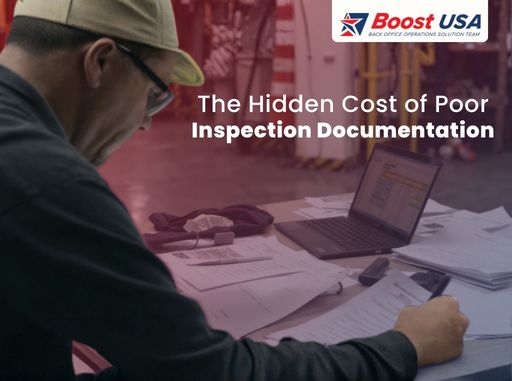
The claim was straightforward until the inspector’s report said otherwise, or rather, until it said nothing useful at all. A mid-sized carrier received a fire damage claim from a commercial property insured three years before. The underwriting file contained an inspection from the original binding date.
The report looked complete on paper, with photographs attached, checklist boxes ticked, and risk narratives present. But when the claims team pulled it during the investigation, two critical fields were vague to the point of uselessness. The electrical panel condition was listed as “acceptable.” The sprinkler coverage note read “appeared adequate.” No specific observations. No documented deficiencies. No follow up recommendations.
The claim settled for significantly more than it should have. No one could prove whether the hazard had existed at the time of inspection because the inspection documentation had never been precise enough to show it either way. This is the hidden cost that almost never appears on a loss ratio report. But it is there. Every time an inspection produces documentation that cannot withstand scrutiny, the carrier absorbs risk it never knew it was holding.
The Gap Between a Completed Inspection and a Useful Inspection
There is a common misconception in insurance operations, and that is that a completed inspection means a protected carrier. However, an inspection only protects underwriting decisions, defends against adverse claims, and generates actionable risk intelligence when its documentation meets a consistent standard. When it does not, which means when an inspection reporting error passes through unchallenged, the inspection becomes a liability that only appears to be a safeguard.
Inspectors work in the field under time pressure, covering complex properties and submitting reports at the end of long days. Without structured loss control documentation standards enforced at the point of review, quality variance is likely to occur.
Some inspectors are very careful, and others are thorough, but they are inconsistent. A few rely on shorthand that means something to them and nothing to an underwriter reviewing the file six months later. The documentation that results ranges from excellent to functionally incomplete, and most organizations cannot tell the difference until something goes wrong.
Common Inspection Reporting Errors in Loss Control Reports
Inspection reporting errors often remain hidden. They accumulate quietly, degrading data quality in ways that only become visible under pressure.
Missing Field Entries: Critical checklist items left blank or marked “N A” when the property condition demands a thorough and narrative description.
Photo Documentation Gaps: Images that are too distant, poorly lit, or poorly angled to capture the specific condition being noted.
Inconsistent Risk Language: The same hazard is described differently across inspectors and territories, making portfolio level pattern recognition impossible.
Unsupported Conclusions: Risk ratings that appear in a report without the underlying observations to justify them create compliance exposure if challenged.
Recommendation Drift: Hazards noted during inspection that generate no formal recommendation, or recommendations issued with no mechanism to track whether they were ever addressed.
Individually, each error seems minor. However, across a book of business, these errors represent a systematic failure of loss control documentation standards.
How Poor Inspection Documentation Creates Financial Risk
Poor inspection documentation creates financial exposure through four channels that most carriers never connect back to the source.
Claims Exposure: When a report cannot clearly establish the property condition at the time of the survey, the carrier loses its ability to dispute claims that may have originated from pre existing hazards. Vague documentation is not neutral in a dispute. It favors the claimant.
Underwriting Mispricing: Risk assessments built on incomplete inspection data produce premiums that do not accurately reflect the hazard profile. Over a portfolio, even small mispricing errors generate meaningful loss ratio deterioration.
Regulatory and Audit Exposure: Carriers and MGAs in regulated markets must demonstrate how risks were assessed and what actions followed. Inspection reports that fail loss control documentation standards create audit trail gaps that invite scrutiny.
The Cost of Rework: When a report is submitted with errors, someone catches it, returns it, follows up with the inspector, and reprocesses the corrected version. Multiply that cycle across a high volume operation, and the administrative burden alone becomes substantial before a single claim is filed.
The Quality Assurance Layer is Missing in Many Inspection Operations
The solution is not harder-working inspectors. It is a structured quality assurance layer that reviews every report before it enters the underwriting workflow by catching errors, flagging gaps, enforcing loss control documentation standards, and returning incomplete submissions before they become embedded in the file.
This is exactly what Boost USA’s QA for Loss Control Reports service provides. Every report is checked for data completeness, photo quality, narrative consistency, compliance alignment, and recommendation accuracy. Performance metrics are tracked by the inspector. Recurring error patterns are identified across territories. Coaching feedback raises documentation quality at the source, not just after the fact.
Paired with Boost USA’s Recommendation Management service, which tracks every hazard recommendation from identification through verified correction, the inspection process becomes a closed loop rather than an open-ended gap.
Why Inspection Documentation Quality Matters for Insurance Risk Management
The inspection visit is what happens in the field. The documentation is what the organization keeps, uses, defends, and builds decisions upon. When both are treated as equally important, quality improves. When documentation is treated as an afterthought, the costs accumulate silently, persistently, and at scale.
Carriers and inspection firms that enforce rigorous loss control documentation standards do not just reduce inspection reporting errors. They build a data asset that improves over time. This leads to cleaner underwriting inputs, stronger claims defense, better risk intelligence, and a portfolio that performs exactly the way the data predicted.
That is what good inspection documentation is worth. And poor documentation costs exactly that much.
Final Thoughts
An inspection only delivers value when its documentation can stand up to underwriting decisions, claims investigations, and regulatory scrutiny. When reporting errors slip through, the inspection may look complete, but fails to protect the carrier where it matters most. Strong documentation standards and consistent quality review ensure that every inspection report becomes a reliable source of risk intelligence rather than a hidden liability.
Frequently Asked Questions About Inspection Documentation
1. Why is proper inspection documentation important for risk management?
Proper inspection documentation provides clear evidence of property conditions, hazards, and risk factors at the time of inspection. It helps underwriters make informed decisions, supports claims investigations, and ensures risks are identified and addressed before they lead to losses.
2. How can poor inspection records impact insurance claims and compliance?
Poor inspection records create gaps in evidence, making it difficult to verify property conditions or defend claim decisions. They can also create compliance risks during audits or regulatory reviews if the documentation does not meet required reporting standards.
3. What information should always be included in an inspection report?
An inspection report should include detailed observations of property conditions, clear risk assessments, supporting photographs, documented hazards, and specific recommendations for corrective actions. Accurate dates, location details, and inspector notes should also be included.
4. How do digital tools improve the accuracy of inspection documentation?
Digital tools standardize data entry, enforce required fields, improve photo documentation, and allow real time quality checks. They help reduce reporting errors, ensure consistent documentation standards, and make inspection data easier to track and analyze.
Strengthen Your Inspection Reports with Smarter Quality Assurance Today!
If your organization wants inspection reports that are clear, defensible, and consistently accurate, it may be time to strengthen the quality assurance layer behind your inspections. Connect with Boost USA to learn how structured QA for loss control reports and recommendation management can improve documentation quality and protect your portfolio.