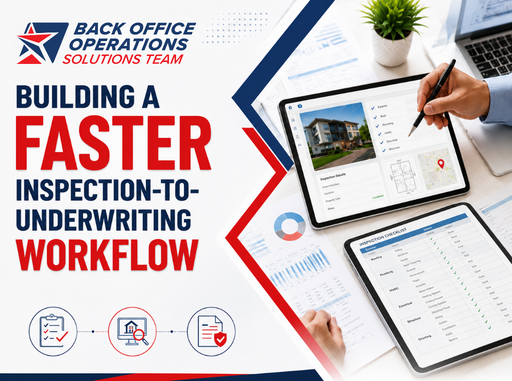
An inspection is only valuable when it reaches the underwriter quickly. Every hour lost between inspection completion and underwriting review can slow decisions, delay policies, and create unnecessary bottlenecks. A streamlined underwriting workflow closes that gap, turning completed inspections into faster, more informed underwriting decisions.
Key Takeaways
- Most delays in the inspection-to-underwriting workflow happen in the handoff, not the fieldwork.
- Insurance workflow coordination matters more than any single tool.
- Operational support for insurance functions closes gaps that technology alone cannot.
- Faster coordination means measurable improvement in inspection turnaround.
The Problem: A Workflow with No Owner
A field inspector finishes a report. It should move straight to QA, then to the underwriter. Instead, it waits. Nobody owns the handoff. QA finds it late. The underwriter chases it manually.
This is not a technology failure. Most teams already have the systems. It is a coordination failure. Work moves fast within departments and stalls between them.
What Is an Inspection-to-Underwriting Workflow?
An inspection-to-underwriting workflow is the full path a report takes: field completion, QA review, recommendation flagging, and delivery to the underwriter’s desk. Each step needs a clear owner and a clear deadline. Miss either, and the report sits.
Why Underwriting Process Efficiency Depends on Coordination
Underwriting process efficiency is not just about how fast an inspector finishes a site visit. It is about how fast that report becomes usable underwriting information.
Loss control inspectors already juggle scheduling, travel, and report deadlines across their day. Strong time management on the field side means little if the receiving end has no equivalent discipline. When QA review, recommendation tracking, and underwriter delivery all run on separate, uncoordinated timelines, even the fastest inspector in the network still results in a slow workflow.
Industry Insight: Where Inspection Workflows Actually Break
The instinct is to blame the field. In practice, the slowdown usually sits between departments. A report clears inspection on schedule, then waits three days in a QA queue nobody is actively watching. By the time an underwriter sees it, the “fast” inspection looks slow on paper.
Carriers running lean loss control teams often see this pattern: strong individual performance, weak collective throughput, because no one owns the seams between steps.
How Boost USA Supports the Full Inspection to Underwriting Workflow
Boost USA provides the operational support insurance teams need to close these gaps: AI-powered QA, BoostRM℠ recommendation management, territory manager support, and back-office processing, all working within the same handoff structure. Instead of a report waiting in a queue, it moves through a managed sequence with a clear owner at each stage, so underwriters receive complete, verified information without having to chase it down.
A managed workflow also reduces the administrative burden on inspectors, QA teams, and underwriters. Rather than relying on scattered emails, spreadsheets, or manual follow-ups, Boost USA helps coordinate tasks, track progress, and keep information moving through the process. This creates greater visibility across the workflow and helps teams identify missing information, unresolved recommendations, or pending reviews before they become larger bottlenecks.
The result is a smoother path from completed inspection to underwriting review. Underwriters receive more complete and verified information without spending valuable time tracking down reports or following up with multiple teams. By bringing operational support and accountability into each handoff, Boost USA helps insurers reduce workflow friction, improve turnaround times, and make faster, more informed underwriting decisions.
Quick Tips for Better Insurance Workflow Coordination
- Assign a clear owner to every handoff point, not just every task.
- Set turnaround targets for QA and delivery, not just field inspections.
- Centralize recommendation tracking instead of relying on email threads.
- Review where reports sit longest, not just how long inspections take.
Final Thoughts:
A faster underwriting workflow is not created by simply adding more technology or asking inspectors to work faster. It comes from eliminating the gaps between inspection, QA, recommendations, and underwriting. When every handoff has an owner, a deadline, and clear visibility, completed inspections become actionable information faster, helping insurers make quicker decisions and keep business moving.
FAQs:
How Can Insurers Improve the Inspection to Underwriting Workflow?
Insurers can improve the workflow by assigning clear ownership to every handoff and setting firm turnaround targets for QA and report delivery. Centralized tracking, proactive follow-up, and dedicated operational support help ensure inspections move from completion to underwriting without unnecessary delays.
What Causes Delays Between Insurance Inspections and Underwriting Decisions?
Delays often happen when completed inspection reports sit in QA queues, email inboxes, or tracking systems without clear ownership. Poor coordination between inspectors, QA teams, and underwriters can create bottlenecks that delay decisions even after the inspection is complete.
Move Inspections to Underwriting Faster With Us!
A completed inspection should move quickly into underwriting review, not get stuck in an inbox or QA queue. Strengthen your inspection-to-underwriting workflow with the right processes, tracking, and operational support to reduce delays and accelerate decisions. Get in touch with us today.