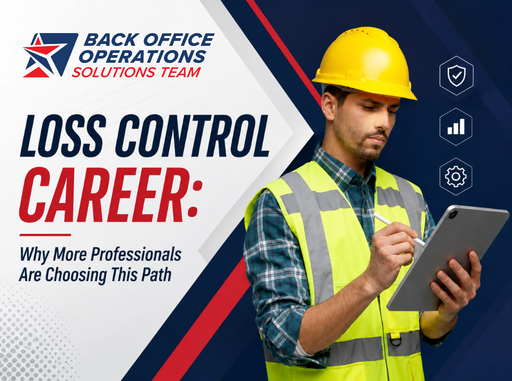
A loss control career doesn’t look like a typical desk job. There is no fixed cubicle. No fixed 9-to-5. Just a schedule you build yourself, and work that actually protects people. That is exactly why so many professionals are switching into it.
Key Takeaways
- Loss control offers real independence. Inspectors set their own schedules and territories.
- No insurance background required; construction, HVAC, and safety experience often translates directly.
- Earning potential scales with effort, not tenure.
- The career path has clear stages, from entry-level inspector to specialized consultant.
- Demand is rising as experienced inspectors retire and commercial risk grows.
What Makes a Loss Control Career Different
Most careers ask you to trade flexibility for stability. A loss control career doesn’t force that trade. You choose your territory. You choose your hours. You get paid per inspection, so the more you take on, the more you earn.
That is loss control career flexibility in practice, not just a recruiting slogan.
Who Actually Succeeds in Loss Control
You don’t need an insurance degree. A loss control consultant evaluates property and casualty exposures, and that skill set already exists in many adjacent trades.
Construction professionals read buildings for a living. HVAC techs spot mechanical risk without thinking twice. Former safety officers already know how to document hazards clearly. All of that transfers straight into risk assessment work.
An Industry Insight Worth Noting
Here’s something most candidates don’t realize until they’re already in the field: demand isn’t flat. It’s growing.
Experienced inspectors are retiring faster than new ones are entering. Commercial risk continues to expand as new construction, new equipment, and new liability categories pile up. Carriers need eyes on the ground, and there aren’t enough of them right now.
That gap is the opportunity. Independent inspection careers aren’t a fallback option anymore. They’re a response to real, growing demand.
A Quick Case in Point
Consider a former general contractor who spent fifteen years reading blueprints and walking job sites. Insurance wasn’t in the plan. But the transition into loss control inspection didn’t require starting over. His construction background allowed him to identify structural and code-related risks faster than most new inspectors could. Within a year, he had moved from basic property inspections to more specialized commercial work, simply because his existing expertise carried over directly into the role.
That’s the pattern across this profession. Field experience, not an insurance resume, is usually the real qualifier.
Why the Risk Assessment Profession Is Growing
Underwriters can’t make good decisions without current, accurate risk data. Every inspection feeds that decision. As commercial policies grow more complex, insurers need more professionals who can walk a property and translate what they see into usable risk intelligence.
That’s not a shrinking function. It’s an expanding one.
How Boost USA Helps
Getting started is usually the hardest part, not the work itself. Boost USA’s Become a Commercial Loss Control Inspector program provides new and experienced professionals with a structured path for training, territory access, and ongoing support as you build your caseload. You’re not left to figure out forms, pricing, or client expectations alone.
Final Thoughts:
A loss control career rewards people who already know how to look closely at the physical world. If you’ve spent years in construction, safety, HVAC, or fleet operations, you already have the instincts this field is built on.
The industry needs more people making that switch, and it’s easier to start than most candidates expect.
FAQs:
Why is loss control considered a flexible career in the insurance industry?
Loss control offers flexibility because inspectors can often choose their schedules, territories, and workload. This allows professionals to manage their time while earning based on the inspections they complete.
How can professionals build an independent career as a loss control consultant?
Professionals can leverage experience in construction, HVAC, safety, or other related fields, complete the necessary training, and build a client base through inspection opportunities. With experience, they can take on more specialized risks and grow their independent practice.
Ready to Build a Career With Real Independence? Contact Us Today!
Step into a career where your skills are in demand, your work makes a measurable impact, and your opportunities can grow with you. If you are ready to build greater professional independence and become part of a growing industry, take the next step with Boost USA today. Start your application and build the career you have been working toward.