An inspector flags an exposed forklift charging station. The report goes out. The file gets closed, not because the hazard was corrected, but because the inspection was completed. That single distinction is the difference between a Loss Control Program that manages risk and one that documents it.
Key Takeaways
- A Loss Control Program is only as strong as its weakest link: what happens after the inspection.
- Proactive recommendation tracking practices convert one-time reports into an ongoing risk reduction process.
- Structured recommendation closure workflows cut unresolved hazard exposure and support E&O defensibility.
- Compliance tracking: insurance data feeds directly into renewal pricing and underwriting decisions.
What Recommendation Tracking Means in a Loss Control Program
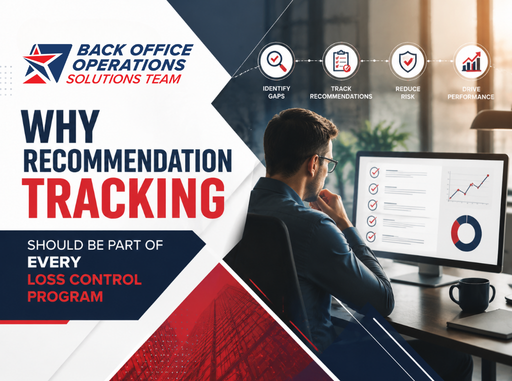
Recommendation tracking is the discipline of logging every corrective action issued in a loss control report, assigning ownership and deadlines, and following each one through to verified closure. It is Loss Control Program management applied to the part of the process most underwriting teams underbuild: not the inspection, but the follow-through.
Why Recommendation Tracking Matters for Loss Control Programs
Most Loss Control Programs are built around inspection volume, such as the number of properties inspected and the speed at which reports were sent. Almost none are built around closure rate. That gap is where preventable claims live. A hazard identified but never corrected is not a mitigated risk; it is a documented one, which is arguably worse from a liability standpoint.
A widely cited peer-reviewed workers’ compensation study found that policyholders who stayed engaged with structured loss control consultation over multiple years posted claim rates of 1.24 per $10,000 of premium, compared with 1.60 to 1.62 for less-engaged groups, with the sustained-engagement group’s overall loss ratio running more than 10% lower.
Companies assigned to a loss control consultant for two or more years had an average claim rate of 1.24 per $10,000 of premium, compared with 1.62 in the initial group and 1.60 in the comparison group. The outcome group’s average loss ratio was more than 10% lower than those of the initial and comparison groups. The research is available through the CDC and NIOSH research archive. Tracking is not paperwork. It is the mechanism that produces those numbers.
Industry Example of Loss Control Program Recommendation Tracking
A mid-sized commercial carrier we’ve seen in this space ran loss control the traditional way: reports emailed, one manual reminder at 30 days, and a hard stop after that. Compliance sat around industry-typical levels. Reports went out, but nobody could say with confidence which recommendations had actually closed.
After building a centralized recommendation-closure workflow with staged reminders and escalation triggers, the picture changed within two renewal cycles: fewer stale, unverified files, a real audit trail that underwriters could point to, and a measurable lift in the number of resolved recommendations. The inspections had not changed. What changed was what happened after.
How Boost USA Helps Improve Loss Control Programs
Boost USA supports the critical operational steps between inspection completion and underwriting review, including QA, recommendation management, coordination, and back office processing. By keeping every handoff organized and every task moving, Boost USA helps insurance teams turn completed inspections into faster, smoother, and more efficient underwriting decisions.
Best Practices for Loss Control Program Management
- Log every recommendation the moment the report is finalized. No delayed data entry.
- Set fixed reminder intervals, such as 30, 45, and 60 days, instead of relying on inspector memory.
- Require photo or documentation evidence before marking anything closed.
- Route stalled recommendations to underwriting, not just back to the policyholder.
- Report closure rate as a core Loss Control Program KPI, alongside inspection volume.
Common Loss Control Program Mistakes to Avoid
- Treating the inspection report as the final deliverable: A report alone does not reduce risk. The real goal is to ensure that identified hazards are corrected and that recommendations are properly resolved.
- Keeping recommendation status in individual inboxes: When updates are scattered across emails and personal tracking systems, important recommendations can be overlooked. A centralized system provides better visibility, accountability, and follow-up.
- Measuring success by inspections completed: Completing more inspections does not necessarily mean the portfolio is safer. Insurers should also track recommendation closure, compliance, and actual risk improvement.
- Focusing on compliance instead of risk reduction: When the process becomes focused only on completing paperwork, the purpose of loss control can get lost. Effective loss control should turn inspection findings into measurable risk improvements.
Loss Control Program Recommendation Tracking Checklist
- Every recommendation logged with owner, deadline, and evidence requirement
- Automated reminders at set intervals, not manual follow-up
- Exception reporting for anything past deadline
- Closure rate tracked and reported at renewal
Final Thoughts:
A completed inspection should mark the start of faster underwriting, not another waiting period. When handoffs are clearly managed, information is verified, and every stage has an accountable owner, insurers can reduce bottlenecks and move decisions forward with greater confidence.
FAQs
Why Is Recommendation Tracking Important for Loss Control Programs?
Recommendation tracking helps insurers monitor whether identified risks are being addressed on time. It provides visibility into outstanding recommendations, follow-ups, and completed corrective actions, reducing the risk of important risks being overlooked.
How Does Recommendation Tracking Help Insurers Monitor Risk Mitigation and Compliance?
It creates a centralized record of recommendations, assigned owners, deadlines, and completion status. This allows insurers to measure compliance, identify overdue actions, and confirm that policyholders are taking steps to reduce identified risks.
Turn Your Loss Control Program Into Real Risk Reduction
Do not let completed inspections become unfinished risk management. Check out BoostRM℠, by Boost USA, to strengthen your recommendation management, improve follow-up, and keep identified risks moving toward resolution. Build a loss control process that goes beyond documenting hazards. Make it work to reduce them. Get in touch with us today!