The inspection identified the hazard. The recommendation was issued. But recommendation management failed completely. Weeks passed without follow up, no one verified whether the issue was corrected, and underwriting decisions continued without a clear understanding of the actual risk condition. The exposure remained exactly where it started until the preventable loss finally occurred.
This is why recommendation management is not just an administrative process in insurance operations. It is a critical underwriting function that determines whether risk information is actively managed or simply documented and ignored. Strong underwriting depends on accurate, current, and verified risk data. Recommendation management is the system that ensures those insights translate into informed underwriting decisions instead of unresolved exposure.
How Recommendation Management Supports Better Underwriting Decisions
There is a widespread assumption in insurance operations that underwriting strength comes primarily from pricing models, inspection frequency, and historical claims data. Those elements matter. But underwriting accuracy weakens when identified hazards are not tracked to resolution.
The real value of underwriting lies in understanding whether risks identified during inspections were formally recommended for correction, whether those recommendations were communicated and monitored, and whether they were ultimately resolved before renewal or policy continuation decisions were made.
Without recommendation management, underwriting decisions rely on outdated or incomplete risk conditions. With it, underwriters gain visibility into how policyholders respond to hazards, whether corrective actions are completed, and which accounts continue to carry unresolved exposure.
The difference between those two underwriting approaches is substantial. One evaluates risk based on static reports. The other evaluates risk based on verified outcomes.
What Happens When Recommendation Management Breaks Down
Most insurance operations have a recommendation management problem they do not fully measure. Hazards are identified, recommendations are issued, and then the process loses visibility. Files go quiet. Deadlines pass. Follow ups never happen. Underwriting teams are left making renewal and pricing decisions without knowing whether the original exposure still exists.
The consequences are not operational inconveniences. They directly impact underwriting performance.
Underwriting Decisions Lose Accuracy
When hazards remain unresolved without visibility, underwriters cannot properly assess current exposure levels. Policies may be renewed under the assumption that corrective actions were completed when no verification exists. That weakens risk selection and increases portfolio instability.
Claims Exposure Increases
When carriers document hazards but fail to manage recommendations through resolution, known risks remain active within the insured portfolio. Preventable losses that could have been corrected continue to generate claims activity, increasing loss ratios and underwriting pressure.
Compliance and Documentation Risks Grow
Regulators and auditors increasingly expect carriers to demonstrate not only that hazards were identified, but that corrective recommendations were tracked and managed appropriately. Open recommendations with no documented follow up create compliance vulnerabilities and weaken audit defensibility.
Portfolio Visibility Declines
Without structured recommendation tracking, insurers lose valuable underwriting intelligence. There is no reliable way to identify recurring hazard trends, policyholders with repeated unresolved recommendations, or property classes producing the highest concentration of open risk issues.
The inspection data exists. The management structure around that data often does not.
Policyholder Accountability Weakens
Recommendation management also shapes policyholder behavior. When recommendations are issued but never followed up, policyholders learn there are no operational consequences for ignoring corrective actions. Consistent follow up, documentation, and verification create stronger accountability across the insured portfolio.
What Effective Recommendation Management Looks Like in Underwriting Operations
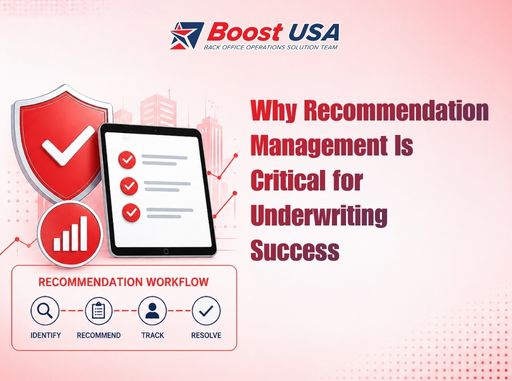
Recommendation management is not a spreadsheet. It is not a collection of reminder emails handled manually by already overloaded teams. It is a structured underwriting support process with defined workflows, ownership, escalation procedures, and documented resolution tracking.
The process begins when inspection findings generate formal recommendations automatically and consistently. Every recommendation enters a monitored lifecycle where issuance is documented, deadlines are assigned, and policyholder communication is tracked.
When deadlines pass without response, escalation occurs systematically instead of relying on manual follow up. When corrective actions are completed, verification is documented before recommendations are formally closed.
This creates a reliable underwriting support framework where decision makers can immediately see:
- Which recommendations remain open
- Which policyholders consistently delay corrective action
- Which properties generate recurring hazards
- Which risks have unresolved compliance issues
- Which accounts demonstrate strong responsiveness and risk improvement
The result is a stronger underwriting operation built on verified risk conditions instead of assumptions.
Recommendation Management Creates Stronger Underwriting Performance
The insurers, MGAs, and inspection firms producing stronger underwriting outcomes are not simply conducting more inspections than competitors. They are managing inspection findings more effectively after the inspection process ends.
Recommendation management transforms inspections from static reports into active underwriting intelligence. It creates a closed loop process where hazards are identified, corrective actions are monitored, and underwriting teams gain ongoing visibility into portfolio risk conditions.
Without recommendation management, inspection data becomes archived paperwork. With it, inspection data becomes a decision making asset that improves underwriting accuracy, strengthens compliance visibility, and supports long term portfolio performance.
Final Thoughts on Recommendation Management
Recommendation management is what turns inspection findings into actionable underwriting intelligence. Without it, hazards remain unresolved, underwriting visibility weakens, compliance gaps expand, and preventable claims continue to impact portfolio performance.
Strong underwriting is not just about identifying risks during inspections. It is about ensuring every recommendation is tracked, managed, verified, and incorporated into underwriting decisions before exposure turns into loss.
Frequently Asked Questions About Recommendation Management
What is recommendation management in underwriting operations?
Recommendation management is the process of tracking inspection recommendations and corrective actions after hazards are identified. It ensures recommendations are communicated, monitored, verified, and resolved so underwriters have accurate visibility into current risk conditions.
Why is recommendation management important for underwriting success?
Recommendation management helps underwriters make informed decisions based on verified risk improvements instead of outdated inspection data. It strengthens risk selection, improves portfolio visibility, and helps reduce preventable claims exposure.
How does recommendation management improve underwriting accuracy?
Effective recommendation management gives underwriters visibility into unresolved hazards, policyholder responsiveness, and completed corrective actions. This allows underwriting decisions to reflect actual property conditions rather than assumptions.
What challenges do insurers face with recommendation management?
Many insurers struggle with inconsistent follow up, manual tracking systems, missed deadlines, limited visibility into open recommendations, and lack of centralized documentation. These gaps reduce underwriting clarity and increase operational risk.
Every Unmanaged Recommendation Today Can Become Tomorrow’s Underwriting Loss
Boost USA’s BoostRM™ Recommendation Management service is designed specifically to close this operational gap. From hazard identification and recommendation issuance to policyholder communication, escalation tracking, and verified correction, BoostRM™ manages the complete recommendation lifecycle so underwriting teams always have visibility into the true status of portfolio risk.
If recommendations are being issued but not actively managed, underwriting decisions are being made without the full picture. Connect with Boost USA today and strengthen underwriting performance through smarter recommendation management.