
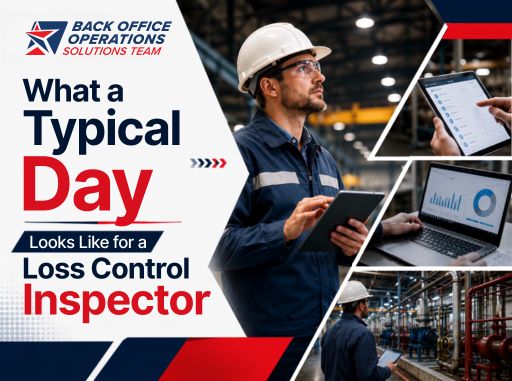
A Loss Control Inspector doesn’t spend the day behind a desk. Every assignment brings a new property, a different set of risks, and an opportunity to help prevent costly insurance claims before they happen. From identifying safety hazards and documenting property conditions to evaluating operational risks, every inspection provides critical information that supports smarter underwriting decisions.
It’s a dynamic career that combines fieldwork, analytical thinking, and problem solving while helping insurers reduce losses and protect both businesses and policyholders.
Key Takeaways
- A Loss Control Inspector typically completes 2–4 site visits per day, each followed by detailed report writing.
- The role blends fieldwork, photography, hazard identification, and written documentation.
- Entry doesn’t require an insurance background; construction, fire safety, and military experience translate well.
- Independent inspectors can earn $100K+ annually with full schedule control.
- Outsourced inspection models are reshaping how carriers staff this work.
What Is a Loss Control Inspector?
A Loss Control Inspector evaluates physical risk at commercial properties on behalf of insurance carriers, MGAs, and risk management firms. Before a policy is underwritten or renewed, someone has to confirm what’s actually on the ground, such as sprinkler systems, electrical panels, roof condition, housekeeping, and security. That someone is the inspector. The work sits at the center of commercial property inspections and broader risk assessment services. It translates physical conditions into data that underwriters can price against.
Why a Loss Control Inspector Plays a Critical Role
Insurance field inspections are not a formality. They are the eyes of the underwriting team. A missed hazard on a single commercial property can turn into a six figure claim. Carriers depend on accurate, timely inspection data to price risk correctly, and inspectors are the only people in the workflow who physically walk the property.
Loss Control Inspector Salary and Industry Statistics
The U.S. Bureau of Labor Statistics reports that the median annual wage for claims adjusters, examiners, and investigators was $76,790 in May 2024, with about 21,600 openings projected each year across the broader field. Independent Loss Control Inspectors working through outsourced networks often exceed that, with earning potential tied directly to schedule and assignment volume rather than a fixed salary. U.S. Bureau of Labor Statistics
A Typical Day for a Loss Control Inspector: Hour by Hour
Time | Task |
7:00–8:00 AM | Review assigned properties, confirm appointments, and plan the route |
8:00–11:00 AM | On site inspection #1: exterior walkthrough, photos, and interviews with the property manager |
11:00 AM–12:00 PM | Drive time and data entry between stops |
12:00–3:00 PM | Inspection #2: interior hazards, fire protection, and electrical review |
3:00–5:00 PM | Write and submit the inspection report and upload photos |
5:00–6:00 PM | Follow up on prior recommendations and complete administrative work |
Loss Control Inspector Case Study: Catching What a Desk Review Misses
A regional MGA insuring a midsize distribution warehouse relied on a field inspector’s routine visit to flag a blocked fire exit and an undocumented rack storage change that increased the fuel load significantly beyond the original policy assumptions. The inspector’s report triggered a same week underwriting review and a corrected premium. This is the kind of issue that never shows up until someone is physically standing in the aisle.
Best Practices for New Loss Control Inspectors
- Photograph everything, even conditions that seem minor, because underwriters need full context, not summaries.
- Write reports the same day while details are fresh.
- Learn to read a property the way an underwriter would: exposure first and aesthetics second.
- Build relationships with property managers because cooperative site contacts make repeat inspections faster.
Common Mistakes Every Loss Control Inspector Should Avoid
- Rushing the walkthrough to hit a daily quota and missing hazards in the process.
- Using vague report language (“some concerns noted”) instead of specific, measurable findings.
- Skipping follow up on prior recommendations, which stalls compliance tracking.
- Underestimating the physical demands. Ladders, roofs, and tight mechanical rooms are routine.
Quick Start Checklist for a Loss Control Inspector
- Confirm site access and contact before arrival.
- Bring a camera, tablet, and inspection form or template.
- Walk the exterior before inspecting the interior.
- Document fire protection, electrical, and housekeeping conditions.
- Submit the inspection report within 24 hours.
- Log any recommendations for follow up tracking.
Final Thoughts
Every commercial property tells a story, but only a skilled Loss Control Inspector knows how to uncover the risks that matter most. The observations made during a single inspection can influence underwriting decisions, reduce preventable losses, improve workplace safety, and help businesses avoid costly claims.
As insurers place greater emphasis on proactive risk management, the demand for knowledgeable, dependable inspectors continues to grow. For professionals who enjoy fieldwork, problem solving, and making a measurable impact, this is more than just a job. It is a career with purpose, flexibility, and long term growth potential.
FAQs
What are the daily responsibilities of a loss control inspector?
A Loss Control Inspector conducts on site property inspections, identifies potential hazards, documents findings with photos and detailed reports, evaluates fire protection and safety systems, and provides recommendations that help insurers assess and reduce risk.
What skills are most important for a successful loss control inspector?
Successful Loss Control Inspectors need strong attention to detail, observation, analytical thinking, communication, report writing, and time management skills. Knowledge of construction, fire protection, and safety practices is also highly valuable.
Ready to Make an Impact? Get in Touch With Us Today!
Join the network that’s helping insurers make smarter underwriting decisions every day. Boost USA connects qualified Loss Control Inspectors with opportunities to build a rewarding career, enjoy flexible assignments, and make a real difference in risk management. Apply today and take the first step toward becoming a trusted partner in preventing tomorrow’s claims.