
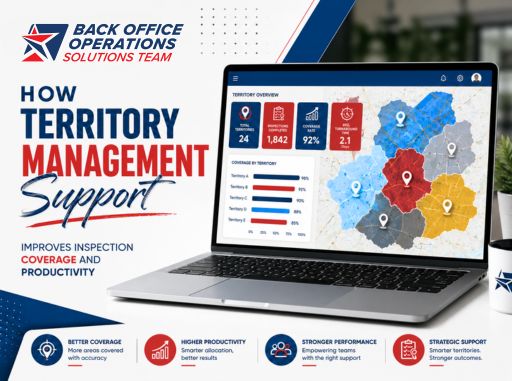
Every extra hour an inspector spends driving is an hour not spent inspecting properties. As inspection requests increase across larger geographic areas, even experienced loss control teams can quickly fall behind. Without effective territory management, inspectors are often assigned inefficient routes and workloads become unbalanced, and important inspections are delayed.
The result is slower turnaround times, higher operating costs, and underwriters relying on outdated risk information. A well planned territory management strategy eliminates these inefficiencies by assigning the right inspectors to the right locations. This improves inspection coverage, increases productivity, and helps insurers make faster, more informed decisions.
Territory management is actually a fix that most carriers overlook, largely because it sounds like a logistics problem rather than a risk problem. When you talk to anyone who has run a regional inspector network for more than a year, you quickly learn the truth.
Why Territory Management Is Essential for Expanding Inspection Coverage
Picture a regional MGA or MGU that expands into two new states after picking up a book of business from a retiring agency. On paper, the inspector roster looks adequate. In practice, three of the five inspectors nominally “covering” the new territory are actually based two counties over, taking assignments only when travel time allows.
Within a quarter, overdue inspections start piling up, a handful of policies get bound without current risk data, and the loss control team begins receiving complaints from underwriting about turnaround times.
This is not a hypothetical edge case. It is the default outcome when territory coverage is assumed rather than actively managed. The fix usually is not hiring more inspectors. It is understanding where the existing network is thin before a gap turns into a missed inspection.
How Territory Management Improves Inspection Scheduling and Coverage
Territory management means matching inspector coverage areas to inspection demand, then continuously adjusting as volume shifts. It requires visibility that most internal teams do not have day to day, such as which inspectors are licensed and experienced for specific property classes, where policyholder density is rising or falling, and how much travel time is quietly eating into billable inspection hours.
According to the National Association of Insurance Commissioners, effective loss control and inspection programs help insurers identify, evaluate, and manage risk more effectively across their portfolios.
Without that visibility, inspection scheduling stays reactive. A request comes in, it gets assigned to whoever is available, and nobody checks whether the assignment makes geographic or operational sense. Across a few thousand inspections each year, that inefficiency compounds into a real cost.
Inspector Routing Best Practices for Better Field Productivity
Inspector routing is often treated as an afterthought, when it is actually one of the highest leverage opportunities to improve throughput. Smart routing weighs three things together: geographic proximity, inspector specialization, and current workload. An inspector qualified for habitational risk should not be routed to a commercial manufacturing site just because they are the closest, and an inspector already at capacity should not receive another assignment because the system does not recognize their workload.
Here is how unmanaged versus territory managed assignment typically compares in field programs:
Metric | Unmanaged Assignment | Territory Managed Assignment |
Average travel time per inspection | 45 to 70 minutes | 15 to 30 minutes |
Inspector utilization rate | Uneven, 50 to 75% | Balanced, 80%+ |
Coverage gap detection | Reactive, after a missed SLA | Proactive, flagged in advance |
Report turnaround | Inconsistent | Predictable, faster |
Specialization match rate | Ad hoc | Systematic |
The pattern holds regardless of carrier size. Inspection coverage optimization is not about adding more inspectors. It is about deploying the ones already in the network more deliberately.
How Territory Management Strengthens Insurance Field Operations
Treating territory management as a scheduling function alone undersells it. It is a piece of insurance field operations that directly shapes underwriting quality. Inspectors who spend less time driving spend more time inspecting. Assignments that match expertise to property type produce more accurate reports. Proactively monitored coverage means fewer decisions are made using stale data.
The National Association of Insurance Commissioners has noted that weak execution of loss control programs can translate into underwriting losses that erode carrier profitability. This is a reminder that inspection logistics are not just an operational detail. They are a risk signal worth watching.
How Boost USA Supports Territory Management and Inspection Scheduling
Boost USA builds Territory Management into its broader field inspection management and loss control support model, matching inspector expertise and location to inspection type as part of a coordinated inspection workflow.
For carriers, MGAs, and MGUs, this means inspection scheduling that accounts for geography and specialization from day one, rather than discovering coverage gaps after they have already cost valuable turnaround time.
Final Thoughts
Effective Territory Management is not simply about assigning inspections. It is about ensuring every inspection reaches the right inspector at the right time with the right expertise. As inspection volumes grow and service territories expand, even small inefficiencies can lead to delayed underwriting decisions, higher operating costs, and missed opportunities to identify risk.
Organizations that invest in effective Territory Management gain faster inspection turnaround, better field productivity, and more reliable risk intelligence, giving underwriting teams the confidence to make timely, informed decisions.
FAQs
How does territory management support improve inspection coverage for insurance organizations?
Territory management support improves inspection coverage by assigning inspectors based on geography, expertise, and workload. This reduces travel time, prevents coverage gaps, speeds up scheduling, and ensures inspections are completed on time across all service areas.
Why is territory management important for increasing inspector productivity?
Territory management increases inspector productivity by optimizing routes and balancing workloads. With less time spent traveling and better assignment planning, inspectors can complete more inspections each day while maintaining consistent report quality and turnaround times.
Ready to Eliminate Coverage Gaps Before They Impact Your Underwriting?
If inefficient territory assignments, inconsistent inspection coverage, or growing workloads are slowing your loss control operations, it is time for a smarter approach. Boost USA combines intelligent Territory Management with expert loss control support to optimize inspector assignments, improve coverage, accelerate report turnaround, and strengthen underwriting performance.
Connect with Boost USA today to discover how our integrated loss control solutions can help you maximize inspector productivity while delivering timely, high quality inspection data that your underwriting teams depend on.