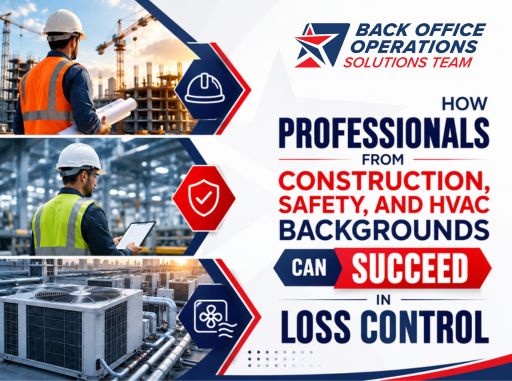
You already know how to walk a jobsite and spot what is wrong before anyone points it out. A cracked slab, a panel that has been “temporarily” wired for two years, or an exit blocked by inventory nobody moved. That instinct is the entire job in loss control. The only thing left to figure out is how to turn it into a career instead of a habit you use for free.
Key Takeaways
- Construction, safety, and HVAC skills map directly onto loss control inspection work. You are not starting from zero.
- Success comes from translating field vocabulary into underwriting language, not from having an insurance degree.
- The fastest movers specialize early in the exposure type their background already covers.
- Consistent report quality, not just inspection volume, determines how much specialized work you are offered.
- Structured entry programs shorten the ramp-up most technical professionals struggle through alone.
What Success in a Loss Control Career Actually Means
A loss control consultant walks a commercial property, identifies hazards and code gaps, and writes a report an underwriter can act on without a follow-up call. Succeeding is not finishing inspections fast. It is writing findings clearly enough, and consistently enough, that territory managers start routing you to specialized work, which is the kind that pays better and does not go to whoever is available that day.
Why Technical Backgrounds Give Loss Control Professionals an Edge
Loss control has a demand problem insurers do not talk about publicly: experienced inspectors are aging out faster than new ones are trained, while commercial risk keeps expanding with new construction, new equipment, and new liability exposure.
Industry employment data shows loss control and related inspection roles growing faster than average this decade, with thousands of openings a year, a gap carriers are actively trying to fill with people who already understand buildings, systems, and hazards, not just insurance forms. That gap is exactly where loss control consultant opportunities are opening up fastest for anyone willing to make the switch. For broader occupational and wage data, the U.S. Bureau of Labor Statistics Occupational Outlook Handbook is a useful independent reference.
A Loss Control Career Case Worth Noting
An HVAC technician with a decade in commercial systems moved into loss control expecting a steep learning curve on the insurance side. It never came. What slowed him down initially was reporting format, not risk identification. He could spot an overloaded panel or a neglected fire suppression tie-in faster than inspectors twice his tenure.
Once he adjusted his write-ups to match underwriting language, referrals for equipment breakdown and boiler and machinery inspections followed within months. His technical read on a property never needed correcting. His reports did, until he learned the format.
Best Practices for Starting a Loss Control Career Faster
- Lead every finding with the risk, then the detail. Underwriters scan for exposure first.
- Specialize toward your background early instead of generalizing across every property type.
- Ask for feedback on your first few reports rather than assuming silence means they’re fine.
- Learn one loss control platform, like LC360, well before trying to work across several.
Common Loss Control Career Mistakes to Avoid
- Writing reports the way you’d write a jobsite punch list instead of a risk narrative.
- Underpricing early work to “prove yourself,” which is hard to renegotiate later.
- Avoiding specialized assignments out of caution instead of leaning into your existing expertise.
- Treating the first inspection like a test instead of the start of a referral relationship.
Loss Control Career Quick Start Checklist
- Identify which exposure type, property, GL, or equipment your background covers best.
- Learn the standard report format before your first assignment, not during it.
- Request a structured onboarding or mentor program rather than self-training.
- Track turnaround time and revision requests to spot where you’re losing efficiency.
How Boost USA Helps Construction, Safety, and HVAC Professionals
Knowing you have the right instincts is one thing. Knowing how to price a job, format a report an underwriter would not kick back, or get assigned the specialized work your background actually qualifies you for is another. This is the gap that stalls most technical professionals in their first six months, not a lack of skill, but a lack of structure around it.
Boost USA’s Loss Control Learning Center closes that gap directly. Instead of learning report standards through trial and error or losing early income to underpriced jobs, you get a built-in path: training on the formats underwriters expect, direct territory access, and a team that answers the pricing and scope questions that would otherwise cost you a day of chasing. You bring the eye for risk. Boost USA brings the runway to turn it into a career, not just a side gig.
Final Thoughts:
Insurers aren’t short on applicants. They’re short on people who can walk a property and actually see it, and that’s a skill you’ve already spent years building on job sites, service calls, and safety walks, not in a classroom. The only real risk in a loss control career is waiting for the “right time” to use what you already know. That time is now, while demand is climbing and the door is still wide open to people with your background, not narrower.
FAQs
Do I Need an Insurance License to Start a Loss Control Career?
Most inspection and consultant roles don’t require an insurance license. They require accurate field assessment skills, which construction, safety, and HVAC professionals already have.
How Long Does It Take a Technical Professional to Become Fully Productive?
Most transition within a few months, since the learning curve is in reporting format and platform use, not in identifying risk itself.
Ready to Put Your Field Experience to Work?
Boost USA’s Loss Control Learning Center gives construction, safety, and HVAC professionals a structured path into inspection work, training, territory access, and support from day one. Get started today.