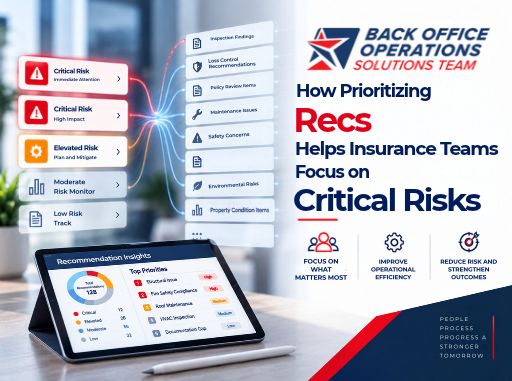
A loss control inspection can uncover dozens of risks, but finding them is only half the job. When overloaded electrical panels, blocked exits, roof damage, and routine maintenance issues all end up in the same follow-up queue, critical recommendations can get buried, delayed, or forgotten. Recommendation Management turns that growing list into a structured process by helping insurance teams prioritize risks, automate follow-ups, track corrective actions, and maintain visibility from inspection to resolution.
The goal is simple: make sure important recommendations do not get lost in the volume of everyday risk management.
Key Takeaways
- Recommendation management works best when severity, not issue date, drives action.
- Not all loss control recommendations carry the same loss potential.
- Tiered recommendation tracking puts critical risks in a fast lane.
- Automated recommendation follow-up keeps every open item visible.
- A documented risk mitigation workflow protects underwriting and audits alike.
What Is Recommendation Management in Insurance?
Recommendation management is the process of tracking, communicating, and following up on the safety and risk recommendations issued in inspection reports. It runs from the day a recommendation is issued to documented, verified closure.
In recommendation management insurance programs, it bridges “we found it” and “it was fixed.” Without this bridge, inspection insight fades into inboxes and spreadsheets.
Why Prioritizing Insurance Recommendations Changes Everything
A single commercial inspection can produce a dozen recommendations. Multiply that across a book of business, and teams drown in volume.
The hazards behind them are not trivial. NFPA’s electrical fires fact sheet estimates that electrical failure or malfunction contributed to about 16,070 non-home structure fires a year in 2010 to 2014, causing roughly $614 million in direct property damage annually. These are exactly the conditions for good inspection flags.
For additional information on electrical fire risks and research, see the NFPA’s electrical fire research.
Prioritization does three things:
- Sorts by severity. The most dangerous conditions rise to the top.
- Set the clock by risk. Critical items get faster follow-up.
- Escalates to the right person. Missed deadlines reach underwriters early.
The Four Tier Model for Recommendation Management
Here is how a typical portfolio might split when every recommendation is scored by severity and likelihood so follow-up matches the risk.
In this example, only 15% of recommendations are critical. Those deserve the fastest response, while the largest slice, moderate items, can follow a steadier cadence.
Critical Recommendations: Critical recommendations involve conditions that could create an immediate or significant risk, such as exposed wiring or disabled sprinkler systems. These recommendations require immediate contact with the insured, weekly follow-ups, and prompt notification to the underwriter when appropriate.
High Priority Recommendations: High priority recommendations address serious conditions that should be corrected promptly, such as blocked exits or poor storage practices. Follow early outreach with structured reminders, including 30-day and 45-day follow-ups, to encourage timely closure.
Moderate Recommendations: Moderate recommendations typically involve housekeeping, maintenance, or other conditions that require attention but may not present an immediate threat. Standard reminders can help keep these items moving toward resolution, followed by proper documentation once the recommendation is closed.
Advisory Recommendations: Advisory recommendations focus on best practice improvements rather than urgent risk conditions. You can generally review these items during the next renewal cycle and use them to support ongoing risk improvement.
How to Build a Risk Mitigation Workflow
Tiers only work when they sit inside a repeatable process. A solid risk mitigation workflow looks like this:
- Capture every recommendation with a unique ID at inspection.
- Score it by severity and likelihood.
- Assign a tier, an owner, and a due date.
- Follow up automatically, and escalate missed deadlines.
- Verify closure with evidence, then feed status into renewal.
Recommendation tracking is not just a reminder system. It is the audit trail behind every closure. For compliance tracking, insurance teams can rely on it; each item needs a date, a document, and an owner. Consistent recommendation follow-up also means no hazard depends on one person’s memory.
What Goes Wrong Without Recommendation Prioritization
- Critical items age quietly. They wait behind routine work.
- Recommendation follow-up loses meaning. Every email looks equally urgent.
- Renewals run blind. No one knows what was actually fixed.
- Audits get painful. Records scatter across inboxes and drives.
How Boost USA Helps With Recommendation Management
Inspections are only half the job. Boost USA closes the loop with BoostRM℠, our recommendation management service built for insurers, MGAs, and MGUs.
Here is what it does:
- Tracks every recommendation from issuance to documented, verified closure.
- Sends automated 30- and 45-day reminders.
- Produces exception reports so overdue and high-risk items surface first.
- Keeps audit-ready records for underwriting and compliance reviews.
- Assigns a Loss Control Professional to answer questions and guide policyholders toward compliance.
Behind it is an insurance-native team. Our AI-powered QA reviews reports before recommendations go out, and Loss Control System Integration connects the workflow to LC360 and your other platforms. Everything runs under SOC 2 Type 2 and ISO 27001 controls.
The result: underwriters decide on confirmed risk conditions, not assumptions. For more on closing the loop, read our guide to compliance tracking for loss control recommendations.
FAQs
What Is Recommendation Management in Insurance?
It is the process of tracking loss control recommendations from issuance to verified closure, with reminders, escalation, and documentation.
Why Prioritize Recommendations?
Because hazards differ in loss potential. Prioritization puts limited team time on the loss control recommendations most likely to become claims.
How Does Recommendation Tracking Help With Loss Control Compliance?
Recommendation tracking creates a centralized record of open items, assigned owners, deadlines, follow-ups, and completed corrective actions. This gives insurance teams greater visibility into outstanding risks and helps them confirm that recommendations have been addressed.
What Should Be Included in a Recommendation Follow Up Process?
A recommendation follow-up process should include a clearly assigned owner, a target completion date, scheduled reminders, escalation for overdue items, and documentation confirming the corrective action has been completed. This creates a consistent process from initial inspection through verified closure.
Can Recommendation Management Be Outsourced?
Yes. Insurance carriers, MGAs, and MGUs can outsource recommendation management to specialized providers that track recommendations, manage follow-ups, document closure, and provide exception reporting while working within existing insurance workflows.
Final Thoughts
A recommendation nobody follows is just an observation. Strong recommendation management prioritizes by severity, tracks to closure, and escalates early, turning inspections into prevention. Find the risk. Rank the risk. Close the risk.
Is Your Recommendation Backlog Hiding a Critical Risk?
Schedule a portfolio review with Boost USA, and we will help you sort open recommendations by severity, age, and likely impact, so you know what needs action first, what can wait, and where BoostRM℠ can bring the backlog under control.