Every insurance claim has a story to tell, often one that could have been prevented. Behind millions of dollars in annual losses lies a simple truth: most risks are manageable, avoidable, and predictable. That is where loss control consulting transforms the insurance landscape, turning reactive claim processing into proactive risk prevention.
What Is Loss Control and Why Does It Matter?
Loss control is the process of identifying, assessing, and mitigating risks before they can result in costly insurance claims. For insurers, it is not just about reducing payouts; it is about building sustainable partnerships with clients and protecting profit margins.
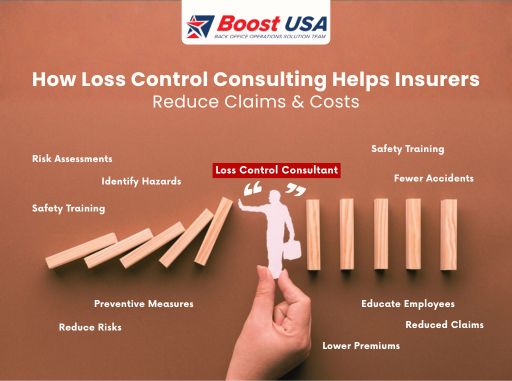
Loss control consultants are like the safety architects of the insurance world. They conduct thorough inspections, carefully analyze operational vulnerabilities, and deliver actionable recommendations that can prevent injuries, accidents, and property damage. The result is fewer claims, lower costs, and stronger client relationships.
The Rising Demand for Loss Control Expertise
Commercial operations are growing more complex, and the need for specialized loss control services has skyrocketed. This rising demand has created many lucrative opportunities for professionals in the field.
Loss control consultant jobs are appearing across insurance carriers and specialized firms, and loss control consultant salaries range from $82,000 to $113,000 annually. Senior consultants with certifications can exceed $143,000.
The loss control consultant job description typically includes conducting risk assessments, developing safety protocols, and ensuring compliance with OSHA regulations. To become a loss control consultant, you need a bachelor’s degree in safety management, plus certifications such as CSP (Certified Safety Professional) or ARM (Associate in Risk Management).
Loss Control Inspections in High-Risk Industries
Commercial Auto and Vehicle Fleets
Commercial auto insurance is one of the highest-risk segments for insurers. Fleet accidents do not just cost money; they can damage reputation, disrupt business operations, and create regulatory challenges.
Loss control inspections for commercial auto focus on:
- Driver qualification reviews – Verifying MVR records, licensing, and training compliance
- Vehicle maintenance audits – Ensuring preventive maintenance schedules reduce mechanical failures
- DOT regulation compliance – Confirming adherence to Federal Motor Carrier Safety Administration requirements
- FMCSA regulations enforcement – Validating Hours of Service logs, driver medical certifications, and drug and alcohol testing programs
Loss control consultants help fleets avoid costly violations and accidents. A single preventable fleet accident can cost insurers anywhere from $16,500 for property damage to more than $500,000 for serious injury claims.
Telematics and the Evolution of Fleet Loss Control
Technology is at the core of modern loss control, and telematics, including safety technology and vehicle tracking, leads the charge. These systems provide real-time data on driver behavior, including:
- Hard braking and rapid acceleration events
- Speeding and unsafe cornering
- Distracted driving indicators
- Route optimization and idle time
Loss control consultants analyze telematics data to identify high-risk drivers and behaviors before they result in claims. Insurers that use telematics-based loss control programs often report claim frequency reductions of 20 to 30 percent within the first year of implementation.
How Boost USA Enhances Loss Control Effectiveness
Managing loss control programs requires significant administrative resources. This is where many insurers struggle. Boost USA bridges this gap by providing specialized loss control inspections and risk mitigation support services. This maximizes efficiency without compromising quality.
Boost USA Key Solutions
- Administrative support – Managing scheduling, territory coordination, and inspection logistics
- Quality assurance – Rigorous review processes ensuring compliance and accuracy
- Self-inspections – Cost-effective self-guided programs for lower-risk accounts
- Recommendation management – Tracking safety recommendations through completion
- Form building and system integration – Customizing templates and seamless LC360 platform integration
Operating 24/7 with SOC 2 compliance and ISO 27001 certification, Boost USA allows insurance carriers to scale loss control operations without the overhead of hiring full-time staff. This leads to faster inspection turnarounds, clearer communication, and better data management. All of these are critical factors in preventing insurance claims.
Final Thoughts
Loss control is not an expense. It is a necessary investment that delivers measurable returns. Insurers that implement robust loss control programs typically see:
- 15 to 25 per cent reduction in claim frequency
- 20 to 40 per cent decrease in claim severity
- Improved loss ratios leading to better underwriting profitability
- Enhanced client retention through value-added services
Especially for commercial auto, the combination of thorough inspections, DOT and FMCSA compliance verification, and telematics integration creates a powerful risk management framework. When supported by an efficient administrative partner like Boost USA, these programs can deliver results that directly impact the bottom line.
Take Action: Strengthen Your Loss Control Program Today
Whether you are an insurance carrier looking to reduce claim costs or a professional exploring loss control consultant jobs, now is the time to embrace proactive risk management. If you are an insurance carrier looking to reduce claims or a professional exploring a loss control consultant role, now is the time to act.
FAQs
How does loss control consulting help insurers reduce insurance claims?
Loss control consulting identifies hazards and recommends preventive measures. This reduces the frequency and severity of claims. Proactive risk mitigation helps prevent losses before they occur.
Why is loss control important for lowering underwriting and operational costs?
Effective loss control reduces claim payouts and rework costs. It also improves risk quality, leading to better underwriting decisions. Lower losses translate into reduced operational and claim-handling expenses.
What role do loss control consultants play in improving risk assessment accuracy?
Loss control consultants conduct on-site inspections and detailed risk evaluations. They provide accurate, real-world data to underwriters. This helps insurers price policies more precisely and avoid high-risk exposures.
How can insurers benefit from recruiting experienced loss control professionals?
Experienced professionals bring industry knowledge and proven best practices. They identify hidden risks and recommend effective controls. This improves portfolio performance and strengthens overall risk management.
Ready to Transform Your Loss Control Operations?
Contact Boost USA to discover how our specialized support services can help you reduce claims, cut costs, and build safer client partnerships. Do not wait for the next claim to reveal what your loss control program is missing. Partner with the experts to make prevention profitable.