Most inspection programs do not fall behind because inspections take too long. They fall behind because everything that happens before and after the inspection is not managed efficiently. A field consultant can complete a flawless inspection, document every risk, submit every photo, and deliver the report on time. Yet the entire process can still stall if the report is not logged promptly, policy information is not verified, or recommendation letters are delayed.
The inspection was never the problem. The workflow surrounding it was. Insurers, MGAs, and risk management firms invest heavily in hiring skilled field inspectors, then leave scheduling, data entry, tracking, and follow up to whatever administrative bandwidth is left.
At low volume, that gap is manageable. At high volume, it becomes the primary source of delays, errors, and rising costs, resulting in significant losses for the company.
Why Administrative Support Is the Hidden Bottleneck in Inspection Programs
Ask underwriters why turnaround times are slow, and they will usually point to the field. Ask field consultants, and they will usually point to scheduling. Ask the scheduling team, and the answer is almost always the same: too many manual touchpoints and not enough dedicated staff to manage them.
Inspection scheduling is administrative work, and in a high volume program, it is constant work. Assigning consultants, confirming appointments, managing reschedules, and routing by territory all require someone to monitor the queue every day. When that responsibility is shared with other duties instead of being owned by a dedicated team, appointments slip, and consultants end up with unbalanced routes.
What Administrative Support Includes in High Volume Inspection Programs
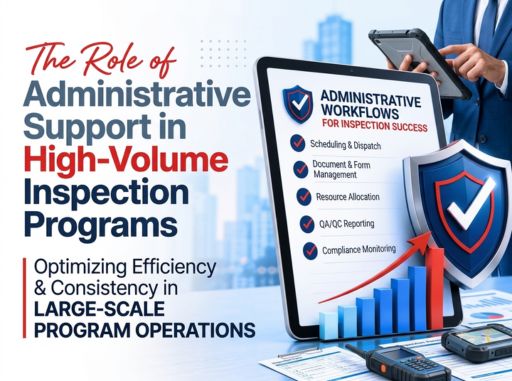
In a well run administrative inspection program, dedicated support typically handles:
- Inspection scheduling and consultant dispatch
- Data entry and policy or account matching
- Recommendation letter generation and tracking
- Certificate of Insurance (COI) follow up
- QA intake logging before reports reach underwriting
- Billing and reporting support tied to inspection volume
None of these tasks require a licensed inspector. However, when they are left undone, they slow the entire operation.
Industry Insight:
One reality that experienced insurance operations leaders quickly recognize is that inspection capacity is rarely limited by the number of inspectors in the field. It is usually constrained by the administrative workflow that supports them. As inspection volumes increase, even small delays in scheduling, report intake, data validation, or recommendation tracking compound across hundreds or thousands of files, creating bottlenecks that affect underwriting decisions, customer service, and operating costs.
Organizations that standardize these support processes are generally better positioned to scale because consistent workflows reduce variation, improve quality, and make performance easier to measure and improve over time. The American Society for Quality highlights process standardization as a key driver of organizational performance and continuous improvement.
Why Standardized Administrative Workflows Improve Accuracy and Compliance
Beyond improving speed, standardized administrative processes also improve consistency and reduce the risk of costly errors. When every inspection follows the same documented workflow for scheduling, data verification, report intake, quality checks, and follow up, organizations create a more reliable audit trail and ensure that critical information reaches underwriters without unnecessary delays.
Standardized processes also make it easier to train new staff, maintain service quality as inspection volumes grow, and identify operational bottlenecks before they affect turnaround times. According to the American Society for Quality (ASQ), standardized quality management practices help organizations improve process consistency, reduce variation, and support continuous improvement across operations.
Standardized Administrative Support Compared With Ad Hoc Support
Function | Without Dedicated Administrative Support | With Dedicated Administrative Support |
Inspection Scheduling | Manual, reactive, uneven territory load | Priority based dispatch and balanced routing |
Data Entry | Delayed and duplicated across systems | Same day entry matched to policy records |
Recommendation Follow Up | Ad hoc and easily forgotten | Tracked on a defined schedule |
QA Intake | Deficiencies reach underwriting | Issues are identified before intake |
Turnaround Time | 5 to 10 or more business days | 2 to 4 business days |
Why Outsourcing Administrative Support Makes Sense for High Volume Inspection Programs
Insurance inspection and loss control teams rarely lack talent. They lack time. Administrative work in a high volume program is repetitive, rules based, and time sensitive. It is exactly the type of function that benefits from a dedicated, specialized team instead of being absorbed into someone else’s already full workload.
This is where an outsourced partner proves its value. A team built specifically for insurance administrative workflows can manage scheduling, tracking, and data entry at a fraction of the cost of building an in-house department. This approach commonly reduces operational costs by 52% or more while maintaining 99.4% QA accuracy because the work is SOC 2 Type 2 and ISO 27001 certified and integrates directly with systems such as LC360.
How Effective Administrative Support Improves Inspection Program Performance
Faster scheduling means consultants spend more time conducting inspections and less time waiting. Faster data entry means QA reviewers work with clean, complete records instead of chasing missing information. Faster recommendation tracking means underwriters make renewal decisions using current information instead of outdated reports.
None of these improvements come from hiring more inspectors. They come from giving the administrative side of the program the dedicated attention it has needed all along.
Final Thoughts on Administrative Support for High Volume Inspection Programs
High volume inspection programs do not succeed because they have the most inspectors. They succeed because every step in the inspection process operates with speed, accuracy, and consistency. When scheduling, data management, quality assurance, and follow up are handled efficiently, inspections move through the pipeline without unnecessary delays, underwriters receive timely and reliable information, and clients receive faster service.
Administrative support is no longer just a back office function. It is a strategic advantage that improves turnaround times, reduces operational costs, minimizes errors, and allows inspection teams to focus on what they do best. For organizations looking to scale inspection programs without sacrificing quality or profitability, investing in dedicated administrative support is one of the smartest decisions they can make.
Frequently Asked Questions About Administrative Support in High Volume Inspection Programs
How does administrative support improve efficiency in high volume inspection programs?
Administrative support streamlines scheduling, data entry, quality checks, and follow up, ensuring inspections move through the workflow without delays. This reduces turnaround times, improves accuracy, lowers operational costs, and allows inspectors to focus on fieldwork.
What administrative tasks are critical for managing large scale insurance inspection operations?
Key administrative tasks include inspection scheduling, consultant dispatch, policy and data entry, recommendation letter generation, Certificate of Insurance (COI) follow up, QA intake, report tracking, billing support, and ongoing communication with inspectors and clients. Together, these functions keep inspection programs organized, efficient, and scalable.
Ready to Eliminate Inspection Delays? Contact Boost USA Today
Your inspectors are only as effective as the administrative team supporting them. Boost USA’s Territory Manager Support provides high volume inspection programs with dedicated scheduling, data entry, and follow up services built specifically for insurance operations. Backed by SOC 2 Type 2 and ISO 27001 certification and integrated directly with LC360, our team helps you reduce delays, improve accuracy, and lower operating costs.
Talk to a Boost USA operations expert today and discover how dedicated administrative support can reduce your turnaround time and operating costs.