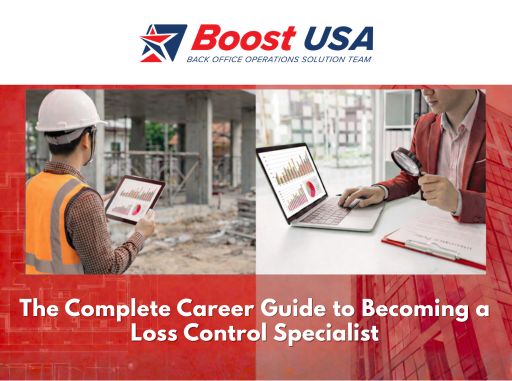
What if one word could unlock a high-paying, flexible, and in-demand career? That word is loss control. Most people do not even hear it until it quietly changes their journey. It shows up in unexpected places: a conversation at a backyard cookout, a tip from a contractor friend, a second career path for a retired firefighter, or a breakthrough moment for a military veteran who realizes that their precision and discipline have real market value.
A loss control inspection career is one of those rare fields where experience from almost any skilled trade translates directly into earning power. In this career, you set your own schedule and can expect to earn a very high income.
What Does a Loss Control Specialist Do
A loss control specialist, also known as a loss control inspector or safety consultant, works on behalf of insurance carriers, MGAs, and risk management firms to physically assess insured properties and identify hazards before claims occur.
Loss control inspectors are the eyes on the ground. They visit commercial properties, construction sites, warehouses, restaurants, schools, and office buildings. You document what you see, evaluate the risks against underwriting guidelines, and produce reports that directly inform how policies are priced and whether coverage is continued. Every major insurance carrier in America needs accurate, current, field data to make smart underwriting decisions. A Loss Control Inspector is the professional who provides it.
Who Succeeds in a Loss Control Career
This career does not require an insurance degree or a corporate background. To succeed in this role, you need aptitudes such as professional judgment, field experience, and the ability to communicate clearly in writing. Professionals who consistently thrive include:
- Construction professionals and general contractors who understand building systems, code, and risks from years of hands-on work.
- HVAC technicians and skilled tradespeople who can read a property and immediately spot structural and mechanical vulnerabilities.
- Insurance industry veterans who want to leave desk-bound roles and return to meaningful fieldwork.
- Military veterans whose training sharpened observation skills, attention to detail, and the ability to write clear, accurate reports under pressure.
- Fire safety and compliance professionals who have spent careers assessing hazards in commercial environments.
- Safety officers and risk managers who are ready to take their expertise and build income on their own terms.
If you have built things, inspected things, or kept people safe for a living, your experience is directly transferable. The learning curve in this field is about process, not expertise, and with the right support, that curve is shorter.
Loss Control Career Earnings and Flexibility
A loss control inspection career is not a traditional 9-to-5 job. It is independent work with real earning potential built around your availability and your territory.
The financial picture:
- Annual earning potential of $100,000 or more for committed, active inspectors.
- Per-inspection pay that scales directly with your output. Work more, earn more.
- No placement fees. You keep 100 percent of your inspection earnings.
- Flexibility to accept or decline assignments, work full time or part time, and choose your coverage area.
What makes this different from other freelance or independent contractor work is the stability of demand. Insurance carriers do not stop ordering inspections when the market softens. Properties always need to be assessed, risks always need to be priced, and qualified inspectors are always in short supply.
Skills Needed to Become a Successful Loss Control Inspector
Getting assignments is one thing. Building a reputation and growing your client base is another. The inspectors who earn the most and get the most work share a specific set of qualities, such as the following:
- Sharp observational skills: The ability to walk a property and notice what others miss.
- Strong written communication: Loss control reports must be clear, accurate, and actionable. Underwriters rely on them.
- Self-management: You are your own office. Scheduling, follow-through, and quality control are on you.
- Customer service instincts: Property owners and managers are your hosts. How you conduct yourself on-site matters.
- Physical readiness: Inspections involve roof access, ladder work, and extended walking on active job sites.
- Critical thinking: Every property is different. Pattern recognition and sound risk judgment are what separate good reports from great ones.
How to Start a Loss Control Career and Why Support Matters
The most common reason qualified candidates never enter this field is simple: they do not know how to start and do not have anyone to show them the process. This is where the role of Boost USA comes in. Rather than leaving new inspectors to navigate the industry alone, Boost USA connects qualified candidates with insurance carriers and provides the infrastructure, learning resources, and operational support that enable inspectors to become productive quickly.
Loss control professionals get access to a Loss Control Learning Center built around loss control, territory managers who coordinate assignments and scheduling, and a professional network of experienced inspectors. You are not a number on a contractor list. You are a professional building a career within a structured, growing operation.
Is Loss Control the Right Career for You
Ask yourself these questions:
- Do I have field experience in construction, trades, safety, or insurance that would allow me to walk a property and evaluate risk intelligently?
- Do I want to work independently, without a traditional office or a boss approving every decision?
- Am I organized enough to manage my own schedule, submit reports accurately, and follow a process consistently?
- Do I want income that grows with the effort I put in, rather than a flat salary with no upside?
- Am I ready to build a client base, a territory, and a professional reputation over time?
If most of those answers are yes, you already have the right aptitude. The rest of the process can be learned.
Final Thoughts on a Career in Loss Control
Loss control is more than a career path. It is a rare opportunity hiding in plain sight. For those willing to step in, learn the process, and take ownership of their work, it offers freedom, stability, and real earning potential. The demand is already there. The path is clearer than ever. Now it comes down to one thing: whether you are ready to take the first step and embrace loss control as your career path.
Loss Control Career FAQs
What qualifications are required to become a loss control specialist?
Field experience in construction, trades, safety, or insurance is highly valuable. Strong observation and report-writing skills, along with basic knowledge of risk assessment, are key. Formal degrees are not always required, but certifications can help.
How does loss control support insurance underwriting and risk management?
Loss control provides on-site risk assessments, identifies hazards, and delivers detailed reports that help underwriters price policies accurately and reduce potential claims.
What industries rely most on loss control professionals?
Insurance, construction, manufacturing, real estate, hospitality, education, and healthcare all rely heavily on loss control professionals.
What career growth opportunities exist in loss control roles?
You can grow into senior consultant roles, specialize in high-risk industries, expand into risk management, or build an independent inspection business with higher earning potential.
Start Your Loss Control Career Today!
Loss control inspection is not a side hustle. It is a profession with a real ceiling, a real support system, and real demand across the country. Contact Boost USA today to start your application. The candidates who move first are the ones who build the best territories. Do not wait for someone else to take yours. Get in touch with us today.