Insurance carriers, MGAs, loss control inspection companies, TPAs, and risk management firms all face the same challenge: how to achieve meaningful loss control cost reduction without compromising underwriting standards.
In the insurance industry, controlling loss control administrative costs is essential. Administrative inefficiencies inside the insurance inspection workflow (including scheduling, QA review, data entry, compliance tracking, and recommendation management) quietly increase inspection overhead and reduce underwriting profitability.
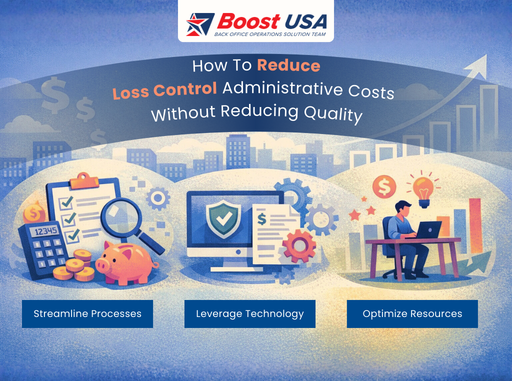
Reducing cost does not mean reducing quality. It means improving inspection workflow efficiency, strengthening loss control QA, and optimizing loss control operational support.
Below are proven strategies insurance enterprises can implement to reduce inspection overhead while maintaining high-quality inspection reporting.
Conduct a Focused Loss Control Cost Audit
A structured cost audit is the first step in any serious loss control cost reduction strategy.
Many organizations track field inspection costs closely but overlook the growing expense of insurance inspection administrative support. These hidden administrative costs can significantly impact the true cost per inspection.
Begin by reviewing:
- Inspection scheduling payroll and coordination costs
- Loss control QA labor hours
- Report formatting and processing time
- Duplicate data entry across platforms
- Recommendation tracking administration
- Compliance documentation management
- Territory management support
- Inspection system integration costs
Categorize expenses between field activity and loss control administrative support. In many cases, administrative handling represents a disproportionate share of total inspection cost.
Next, identify redundancies in the insurance inspection workflow, such as:
- Multiple systems requiring the same data entry
- Manual reformatting of inspection reports
- Separate teams managing recommendation follow-up
- Duplicate compliance tracking processes
If your inspection turnaround time in insurance operations is inconsistent, or if your loss control QA team frequently reworks reports, those are clear indicators of excessive administrative overhead.
A cost audit provides clarity and identifies where inspection process improvement can deliver immediate savings.
Automate Insurance Inspection Administrative Support
Automation is one of the most effective ways to reduce inspection overhead and improve inspection workflow efficiency.
Administrative tasks within loss control operational support are often repetitive and rule-based. Automating these tasks improves consistency, reduces error rates, and lowers cost per file.
High-impact automation areas include:
- Inspection scheduling confirmations and reminders
- Territory manager coordination updates
- Standardized loss control report formatting
- Data transfer between inspection platforms and underwriting systems
- Automated recommendation tracking alerts
- Compliance documentation logging
By automating elements of the insurance inspection workflow, organizations can:
- Reduce manual data entry
- Improve loss control QA consistency
- Shorten inspection turnaround time
- Scale operations without increasing headcount
- Strengthen underwriting workflow efficiency
Automation directly supports loss control cost reduction by eliminating administrative waste.
Eliminate Redundancy in the Insurance Inspection Workflow
Redundant steps within the insurance inspection workflow are a major driver of unnecessary cost.
To reduce inspection overhead, map your entire inspection lifecycle from order intake to underwriting decision. Identify:
- Multiple approval layers that do not improve risk assessment
- Data being entered or reconciled more than once
- QA edits focused on formatting instead of substance
- Disconnected systems requiring manual reconciliation
Reducing redundancy through inspection process improvement may involve:
- Consolidating platforms
- Standardizing loss control QA procedures
- Creating consistent report templates
- Centralizing recommendation tracking
- Improving cross-department communication
When processes are standardized, loss control QA services become more efficient, error rates decline, and administrative costs decrease.
Apply Lean Principles to Loss Control Operational Support
Lean thinking is highly effective in reducing loss control administrative costs.
The core question should always be: does this step improve underwriting accuracy, or is it purely administrative overhead?
Applying lean principles to loss control operational support can include:
- Removing unnecessary internal approvals
- Reducing excessive documentation steps
- Standardizing inspection reporting workflows
- Organizing digital files for faster retrieval
- Creating clear SOPs for loss control QA
Lean inspection process improvement reduces waste while preserving inspection quality.
Outsource Loss Control Administrative Support Strategically
Outsourcing is one of the most powerful tools for reducing insurance inspection administrative support costs.
Outsourcing does not mean outsourcing underwriting expertise. It means outsourcing non-core administrative functions that do not require field-level risk judgment.
Commonly outsourced functions include:
- Inspection scheduling coordination
- Data entry and system management
- QA formatting and report standardization
- Recommendation management and follow-up
- Compliance tracking documentation
When organizations choose to outsource loss control support, they benefit from:
- Lower fixed labor costs
- Scalable administrative capacity
- Reduced overhead expenses
- Improved inspection turnaround time
- Greater focus on core underwriting functions
Strategic outsourcing strengthens loss control operational support while controlling cost growth.
Integrate Technology to Improve Inspection Workflow Efficiency
Disconnected systems increase administrative handling and reduce efficiency.
Modernizing your insurance inspection workflow through system integration significantly reduces inspection overhead.
Technology solutions that improve loss control cost reduction include:
- Digital inspection workflow platforms
- Mobile inspection applications
- Automated loss control QA checkpoints
- Real-time recommendation tracking systems
- Direct integration between inspection and underwriting platforms
When inspection data flows seamlessly between systems, manual reconciliation decreases. This directly improves inspection turnaround time and lowers administrative cost per file.
Use Data Analytics to Support Ongoing Loss Control Cost Reduction
Sustained cost reduction requires visibility.
Tracking performance metrics across your insurance inspection workflow allows leadership to identify bottlenecks and inefficiencies early.
Key metrics include:
- Administrative cost per inspection
- Inspection turnaround time in insurance operations
- Loss control QA rework percentage
- Recommendation closure rate
- Inspector scheduling efficiency
- Administrative labor hours per file
Data-driven inspection process improvement ensures continuous optimization of loss control operational support.
The Strategic Advantage of Optimized Loss Control Operations
Reducing loss control administrative costs isn’t about cutting corners; it’s about creating a streamlined, efficient, scalable inspection operation that supports underwriting profitability.
Organizations that focus on:
- Loss control cost reduction
- Insurance inspection administrative support optimization
- Loss control QA standardization
- Inspection workflow efficiency
- Strategic outsourcing of loss control support
- Technology-driven inspection process improvement
Achieve measurable results, including:
- Lower cost per inspection
- Faster underwriting decisions
- Stronger compliance documentation
- Higher report consistency
- Improved operational scalability
- Increased profitability
For insurance carriers, loss control inspection companies, MGAs, TPAs, and risk firms, improving loss control operational support is a competitive necessity.
If your organization has not recently evaluated its insurance inspection workflow and administrative cost structure, there is likely significant opportunity for improvement.
Operational excellence in loss control is one of the most effective ways to reduce inspection overhead while strengthening underwriting performance.