A loss control inspector flags a faulty electrical panel or an unguarded machine press. The report is delivered to the policyholder, followed by a reminder. Thirty days pass, then sixty, and no clear follow up occurs. No documentation is tracked, and months later, a preventable hazard becomes a costly claim. This situation is not rare. It is a persistent problem across the insurance industry. Carriers invest heavily in inspections but lack a reliable system to track whether policyholders are complying with loss control recommendations, which follow through on proper loss control management and structured recommendation tracking insurance practices.
This results in a costly gap between identifying risks and eliminating them. Let us delve deep into why most insurers are getting compliance tracking for loss control recommendations wrong and how weak loss control management creates long term operational risk.
The Gap Between Inspection and Action in Loss Control Management
Loss control inspections are one of the most effective tools in the commercial insurance environment and form the foundation of strong loss control management programs. Organizations like the National Association of Insurance Commissioners have quoted that poor risk mitigation strategies lead to underwriting losses.
But identifying hazards does not automatically eliminate them. An inspector may document risks in detail, but if the policyholder does not implement the recommended fixes, the hazard remains exactly where it was before, highlighting weaknesses in loss control management oversight.
Many insurers focus most of their resources on the inspection itself and the outcome that follows. However, without a structured tracking framework supported by loss control management practices, recommendations often get lost in shared drives, email threads, or outdated spreadsheets.
Over time, these unresolved hazards evolve into costly claims that stronger loss control management processes could have prevented.
To put it simply, the inspection process may be thorough and valuable, but without compliance tracking and consistent follow up, its value is dramatically reduced. Effective loss control management depends on what happens after the inspection, not just during it.
Hidden Cost of Poor Recommendation Tracking in Insurance
The lack of a structured compliance tracking system leads to several operational issues and weakens loss control management across the insurance portfolio. First, recommendations get lost frequently. When teams rely on email conversations or manual spreadsheets, it becomes difficult to know whether a policyholder has ever responded. Even when follow ups occur, they depend on individual memory rather than automated reminders, weakening loss control management accountability.
Second, management visibility becomes limited. Underwriters and loss control managers often struggle to see which recommendations remain open, which are overdue, and which have been resolved. Without clear oversight, it is not possible to maintain effective loss control management across hundreds of policies.
Underwriters and loss control managers often struggle to determine which recommendations remain open, are overdue, or have been resolved. Without clear oversight, it becomes nearly impossible to prioritize the highest risk issues, further exposing gaps in loss control management processes.
Third, regulatory and audit exposure increases. When regulators request documentation showing how recommendations were handled, teams may spend days or even hours locating scattered files and communication records that should have been organized within a proper loss control management system.
Finally, and most importantly, hazards that are unresolved lead to claims directly. Every ignored recommendation represents a risk that was identified but never corrected. For insurers managing thousands of policies, these unresolved issues can translate into millions of dollars in preventable losses and signal serious weaknesses in loss control management.
These costs rarely appear as a single line item on a financial report. Instead, they surface gradually through higher claim payouts, worsening loss ratios, and increased regulatory scrutiny that stronger loss control management could have mitigated.
What Effective Compliance Tracking Looks Like for Loss Control Recommendations
A strong compliance tracking process treats all the recommendations as part of a structured lifecycle within a broader loss control management framework. The process starts with a centralized intake. Each recommendation should be entered into a single system immediately after an inspection, including a unique identifier, policyholder information, hazard description, required corrective action, and compliance deadline. From that moment forward, the recommendation becomes fully traceable and accountable under a structured loss control management system.
Automated reminders are the next important step. Typically, notifications go out at defined intervals, like 30 and 45 days, reminding policyholders to address outstanding items and submit proof of corrective action. These reminders not only encourage compliance but also create a clear communication record that strengthens loss control management oversight.
When policyholders provide documentation such as photographs, contractor invoices, or safety certificates, those materials should be logged directly against the recommendation. Organized documentation ensures that every update is easy to access, review, and verify within the broader loss control management ecosystem.
Finally, exception reporting helps risk managers identify the high priority issues before they escalate. For instance, an unguarded industrial machine requires faster attention than a minor office safety improvement. A strong system highlights these differences and allows teams to respond appropriately through disciplined loss control management.
Why Manual Systems Fail at Scale in Loss Control Management
Manual processes work but only for small volumes, and they tend to collapse under large workloads. A team that manages fifty recommendations might keep track through spreadsheets with enough effort. However, a portfolio with hundreds or thousands of recommendations can create an overwhelming administrative burden, weakening loss control management consistency.
Each recommendation may require multiple communications, updates, reminders, and documentation reviews over a ninety day period. When multiplied across a large portfolio, this creates thousands of tasks every quarter. Without automation and centralized tracking, important items tend to slip and undermine loss control management outcomes.
Forward thinking insurers recognize this challenge and separate the administrative management of recommendations from the technical work of underwriting and risk assessment. They rely on dedicated systems that can manage compliance at scale and strengthen loss control management across the portfolio.
Direct Impact of Recommendation Compliance on Underwriting Performance
Recommendation compliance is not just about safety; it is also about profitability and stronger loss control management. When policyholders address hazards promptly, the portfolio’s overall risk level improves. Fewer hazards lead to fewer incidents, which in turn reduce claim frequency and severity.
Lower claims translate directly into better loss ratios and stronger underwriting performance. In competitive markets, this improvement can also create greater pricing flexibility and improved client retention. Insurers that treat recommendation tracking as a core operational function consistently see better financial outcomes than those that treat it as an administrative afterthought within their loss control management programs.
Final Thoughts: Closing the Compliance Gap in Loss Control Recommendations
If your organization still manages loss control recommendations through scattered emails, spreadsheets, or disconnected systems, the compliance risk is real. As policy volumes grow, the likelihood that critical hazards will go unaddressed increases. This is exactly the challenge that Boost USA set out to solve.
FAQs
What are loss control recommendations and why are they important for insurance compliance?
Loss control recommendations are safety improvements suggested after an insurance inspection to reduce risks and prevent accidents. They may include fixing faulty equipment, improving fire protection, or correcting workplace hazards. Following these recommendations helps businesses maintain insurance compliance and lowers the likelihood of claims.
How does compliance tracking improve the effectiveness of loss control recommendations?
Compliance tracking ensures that recommended safety actions are actually completed rather than ignored after an inspection. It provides visibility into open, overdue, and completed recommendations. This structured follow up helps insurers reduce risk exposure and prevent future claims.
What tools or systems help insurers monitor loss control recommendation compliance?
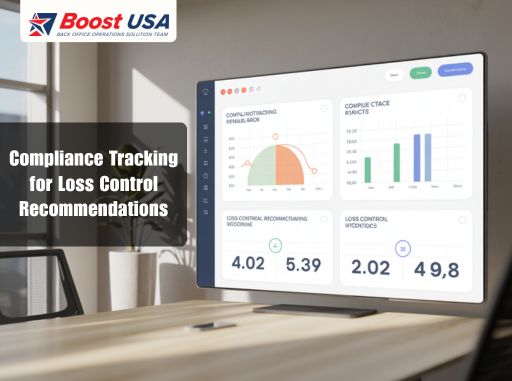
Insurers typically use recommendation management platforms, compliance tracking software, or centralized risk management systems. These tools automate reminders, track documentation, and maintain communication records. They also provide dashboards that show the status of every recommendation in real time.
How often should businesses review and update their loss control recommendations?
Businesses should review loss control recommendations regularly, usually every 30 to 90 days after an inspection. Ongoing monitoring ensures hazards are corrected within the required timeline. Regular reviews also help businesses stay compliant and maintain a safer operating environment.
Ready to Turn Loss Control Recommendations Into Real Risk Reduction With Boost USA? Act Today!
Boost USA’s Recommendation Management gives insurers complete control over the recommendation lifecycle. With real time visibility, automated follow ups, and centralized documentation, teams can track open, overdue, and completed items without relying on scattered emails or spreadsheets.
If you want to reduce claims, improve loss ratios, and bring real accountability to your loss control program, discover how BoostRM™ from Boost USA can transform the way your organization tracks and closes loss control recommendations.