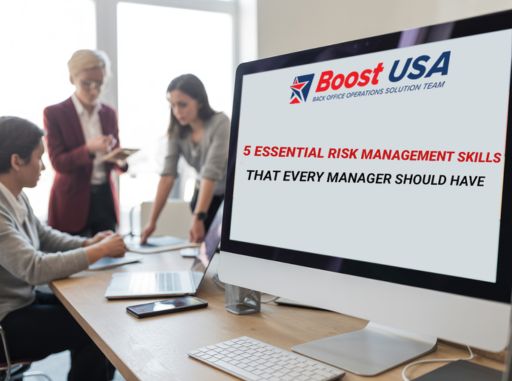
Most managers do not fail because of no or little experience. They fail because they cannot see the risks until it is already too late. Whether you are a construction site manager or an insurance manager, you need to learn risk management. It is not a department but a discipline that every manager must own. The cost of getting it wrong includes claims, losses, liabilities, and reputations that take years to rebuild.
Let us delve deep into five essential risk management skills that separate reactive managers from proactive ones and give them an edge.
1. Risk Identification Skills Every Manager Must Develop to Detect Hidden Threats
It is difficult to manage what you cannot see. Hence, the first and most critical skill in risk management is the ability to identify threats before they become losses.
Strong risk managers do not wait for incidents to reveal vulnerabilities. They conduct routine walk throughs, ask uncomfortable questions, and look beyond the obvious. A slippery floor is easy to spot. A quietly deteriorating electrical panel is not, until it catches fire and leads to an accident and major losses.
This is the reason why loss control is the most powerful tool. It is the systematic process of identifying, evaluating, and reducing hazards before they turn into costly claims. Managers who embed loss control thinking into daily operations consistently outperform their peers who treat safety as a checklist item. According to the Occupational Safety and Health Administration guidance on hazard identification, organizations must proactively identify and assess workplace hazards through regular inspections and data review to prevent incidents before they occur.
Boost USA Advantage: Boost USA’s Loss Control Inspection and Recommendation Support helps insurance carriers and risk managers stay ahead of exposure through professional field inspections, guided self inspections, and meticulous recommendation management so that nothing falls through the cracks.
2. Inspection Quality Assurance and Loss Control Execution for Effective Risk Management
Identifying risk means nothing without consistent execution. Consistency helps inspections maintain high quality. Too many organizations treat inspections as a compliance box to check. However, the reality is that a faulty inspection process creates a false sense of security. Incomplete data, inconsistent forms, and uninformed inspectors do not just miss hazards. They produce liabilities of their own.
Managers who master inspection quality assurance understand that every field report must be accurate, thorough, and timely. They establish clear standards, train their teams, and review outputs for consistency.
Boost USA Advantage: Boost USA’s QA for Loss Control Reports service ensures every report that enters the underwriting pipeline meets strict quality standards. Our dedicated QA team reviews, flags, and corrects inconsistencies that protect the integrity of the entire risk management process.
3. Data Interpretation Skills That Turn Inspection Reports Into Strategic Decisions
A stack of inspection reports is just paper without the ability to read what it is telling you. The third essential skill is translating raw findings into clear and strategic decisions. This means understanding trend patterns across locations, recognizing which recommendations are being ignored, and knowing when escalation is required.
Managers who are skilled in this area do not just read reports. They act on them. They know which data points carry the most underwriting weight and which red flags signal an account that needs immediate attention.
4. Underwriting Report Literacy for Better Risk and Financial Decisions
Risk managers who understand the underwriting process hold a massive advantage. The underwriting report is the bridge between field observations and financial decisions. A well prepared and accurate report can mean the difference between a profitable account and a costly mistake.
Skilled managers know how to present risk data in a way that supports sound underwriting decisions. They understand coverage implications, know what an underwriter needs to see, and communicate loss control findings in clear and structured language. Many times this particular skill is undervalued, and it shows in the form of vague reports, missing documentation, and delayed submissions that directly erode underwriting profitability.
Boost USA Advantage: Boost USA supports insurers, MGAs, and TPAs with report processing, compliance tracking, and operational workflows that keep underwriting pipelines moving cleanly and efficiently. Our back office infrastructure ensures that report quality and turnaround never become bottlenecks.
5. Recommendation Management and Follow Through in Risk Management Systems
Identifying a hazard and documenting it means nothing if the recommendation is never resolved. The fifth and most overlooked skill is recommendation management, which is the discipline of tracking, following up, and verifying that corrective actions are actually completed. This is where risk management either compounds its value or quietly fails.
Managers who excel here build systematic workflows for tracking open recommendations, setting deadlines, and verifying closure with documentation. They treat an unresolved recommendation as an open exposure.
Boost USA Advantage: Boost USA’s BoostRM™ Recommendation Management platform is purpose built for this exact challenge. It provides structured tracking, follow up workflows, and real time visibility into open items. So risk managers can prove, not assume, that hazards have been addressed.
Final Thoughts on Building Strong Risk Management Skills
Great risk management is not about reacting faster. It is about building systems that catch problems before they can become losses. From the aptitude of loss control to flawless inspection quality assurance and clean underwriting reports, these five skills form the foundation of a mature and profitable risk operation.
Boost USA exists to make this easier. As a full service back office operations partner for insurers, MGAs, and risk management firms, we bring the tools, talent, and technology to elevate every stage of the risk management lifecycle.
Frequently Asked Questions About Risk Management Skills
What are the most important risk management skills every manager should develop?
The most important risk management skills include risk identification, effective inspection and loss control execution, data interpretation, underwriting report literacy, and recommendation follow through. These skills help managers detect hazards early and respond with structured solutions. Together, they build a proactive risk management culture rather than a reactive one.
How can managers improve their risk management decision making abilities?
Managers can improve decision making by relying on accurate inspection data, analyzing risk trends across operations, and learning how underwriting reports translate risk into financial exposure. Continuous training, routine inspections, and structured reporting systems also sharpen judgment. Data driven insights allow managers to act before risks escalate into losses.
Why is risk management essential for business success and operational stability?
Risk management protects organizations from unexpected disruptions, financial losses, and legal liabilities. By identifying and controlling hazards early, businesses maintain operational continuity and protect their reputation. Strong risk frameworks also support better strategic planning and long term stability.
How do strong risk management skills help prevent financial and operational losses?
Strong risk management skills enable managers to detect vulnerabilities early, implement corrective actions, and ensure recommendations are completed. This reduces accidents, claims, downtime, and costly compliance failures. Over time, proactive risk control directly protects profitability and operational efficiency.
Risks Do Not Wait and Neither Should You! Act Today!
Prevent risks before they turn into costly claims. It is time to move from reactive risk management to a system that actively protects your portfolio. Do not let preventable risks erode your reputation and profitability. Explore our Recommendation Management service and see how structured tracking and follow ups keep every loss control recommendation from falling through the cracks.